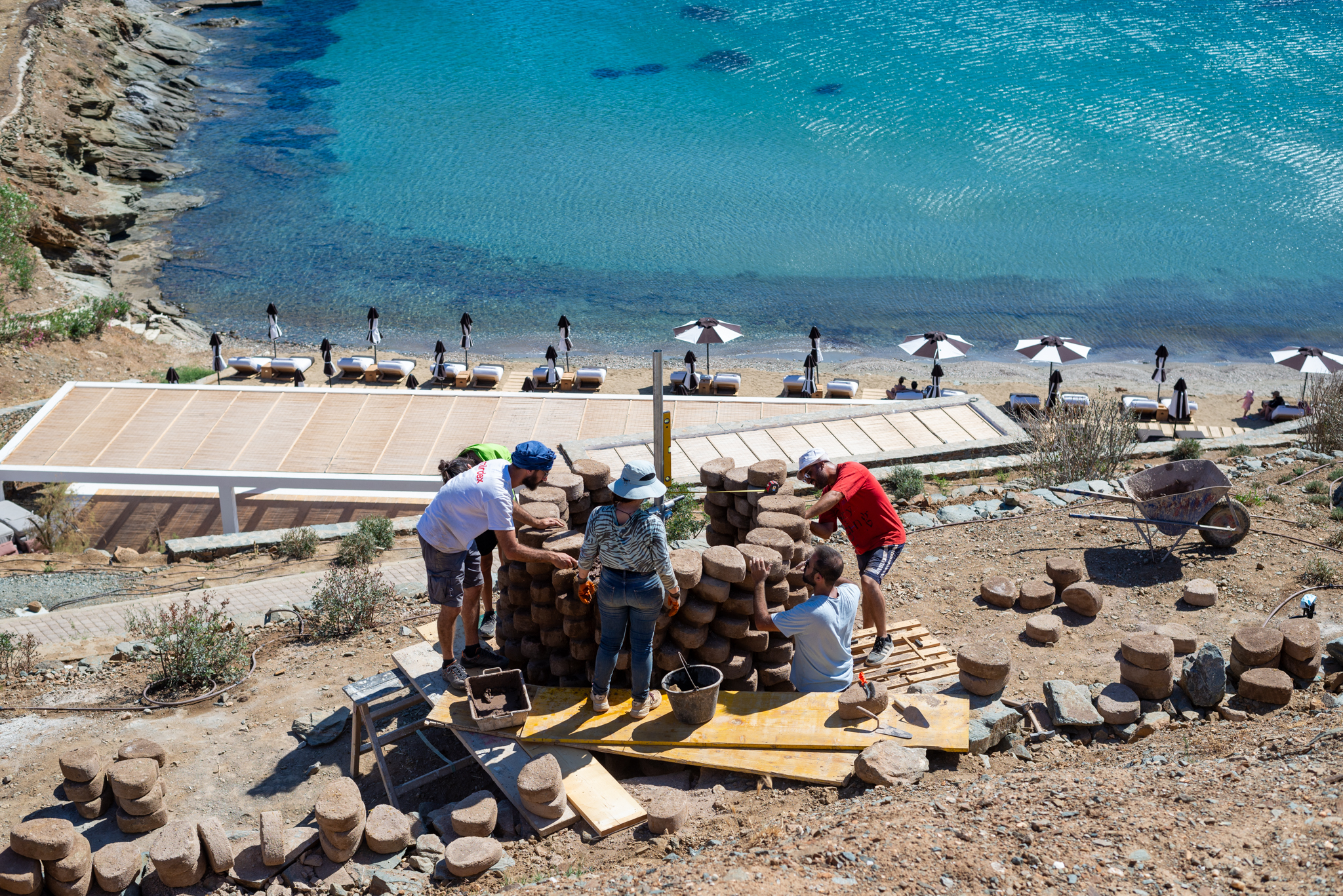
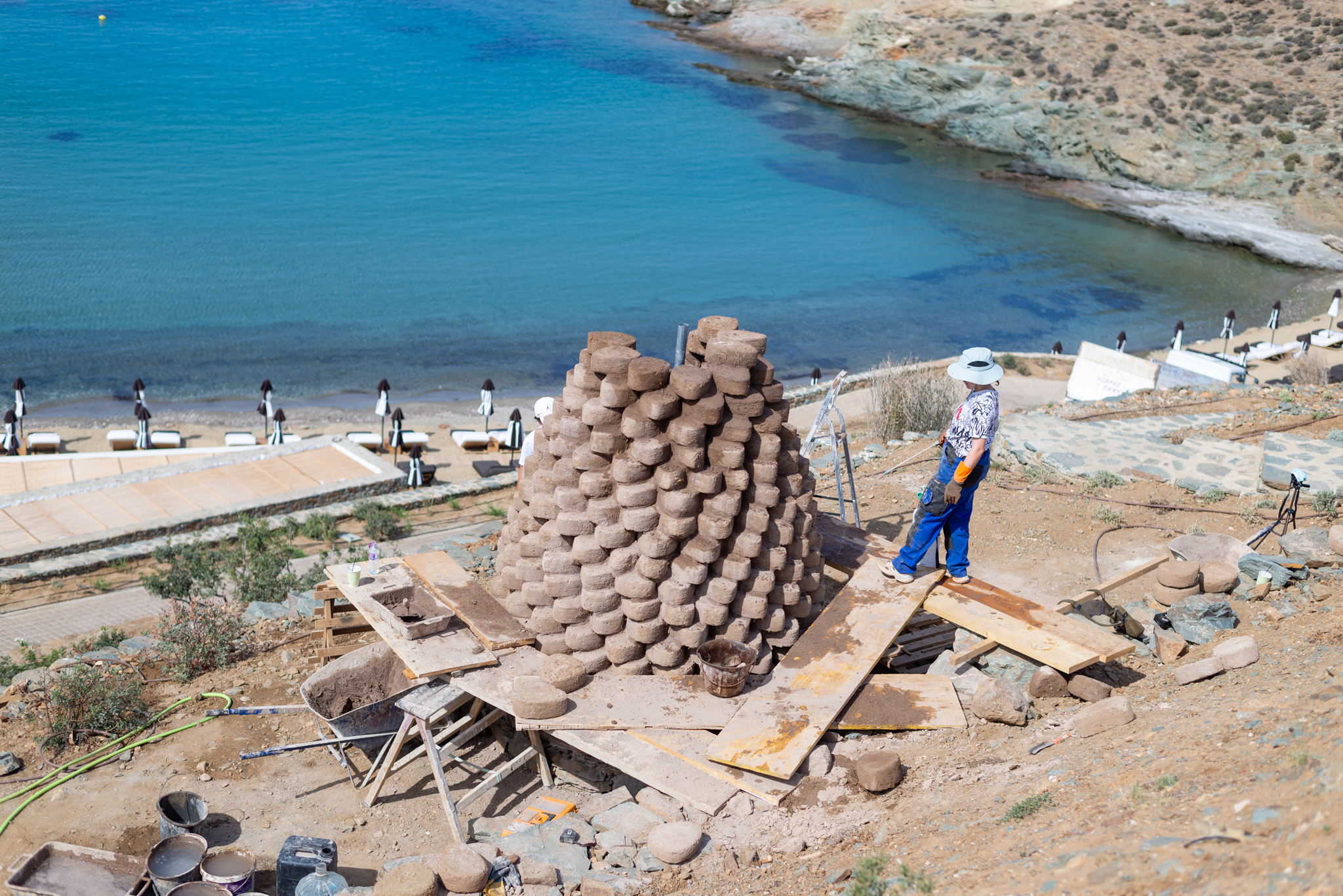
WIND BREAKER, 2024

lime, soil, river sand, rubble, straw, peat, raw and fired umbra natural pigments, linseed oil, stones _ 210 X 270 cm

construction advisor: AITHRIO|architecture, Dimitra Kada

commissioned by Suppressed Creatives for Odera Hotel Tinos, Greece

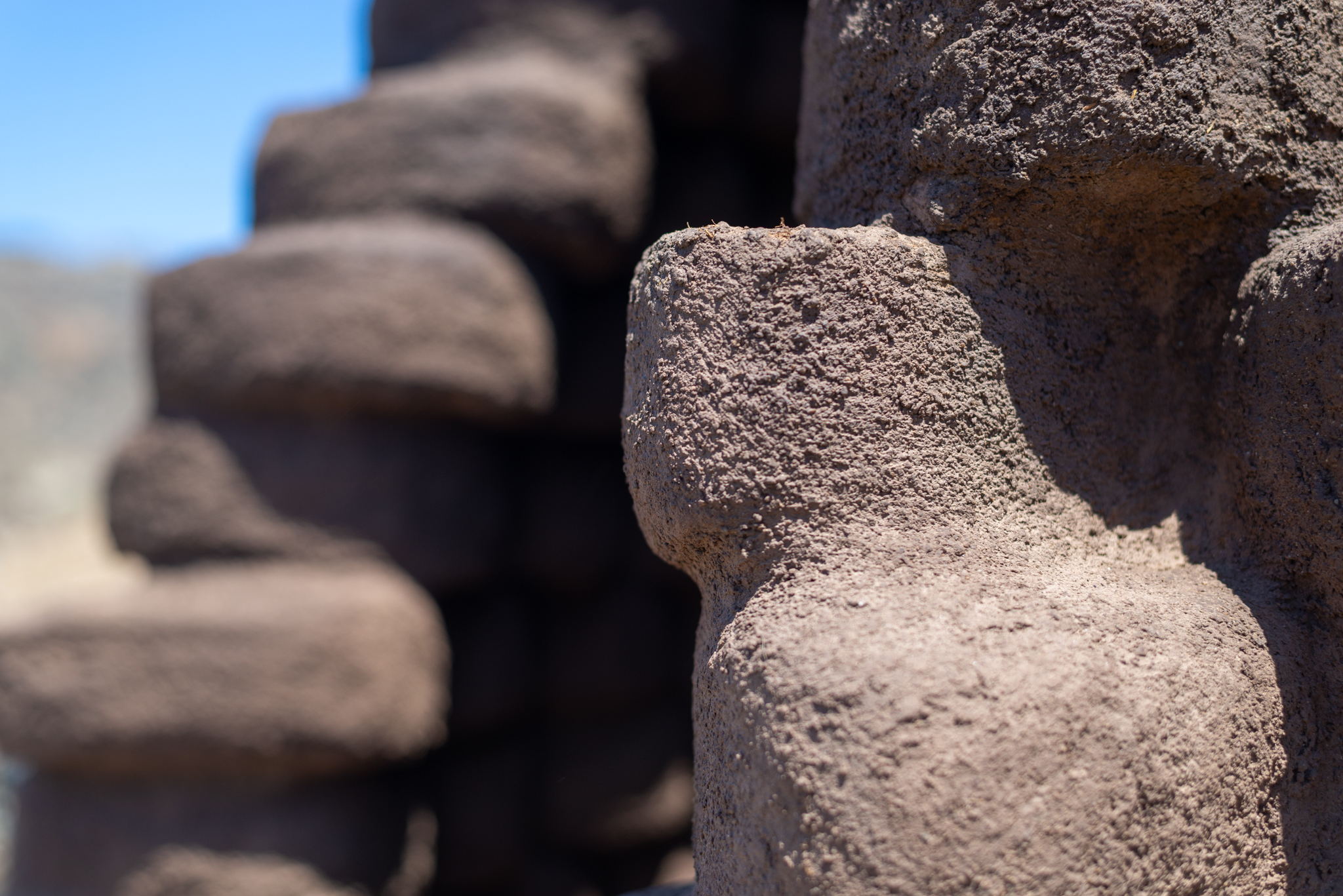
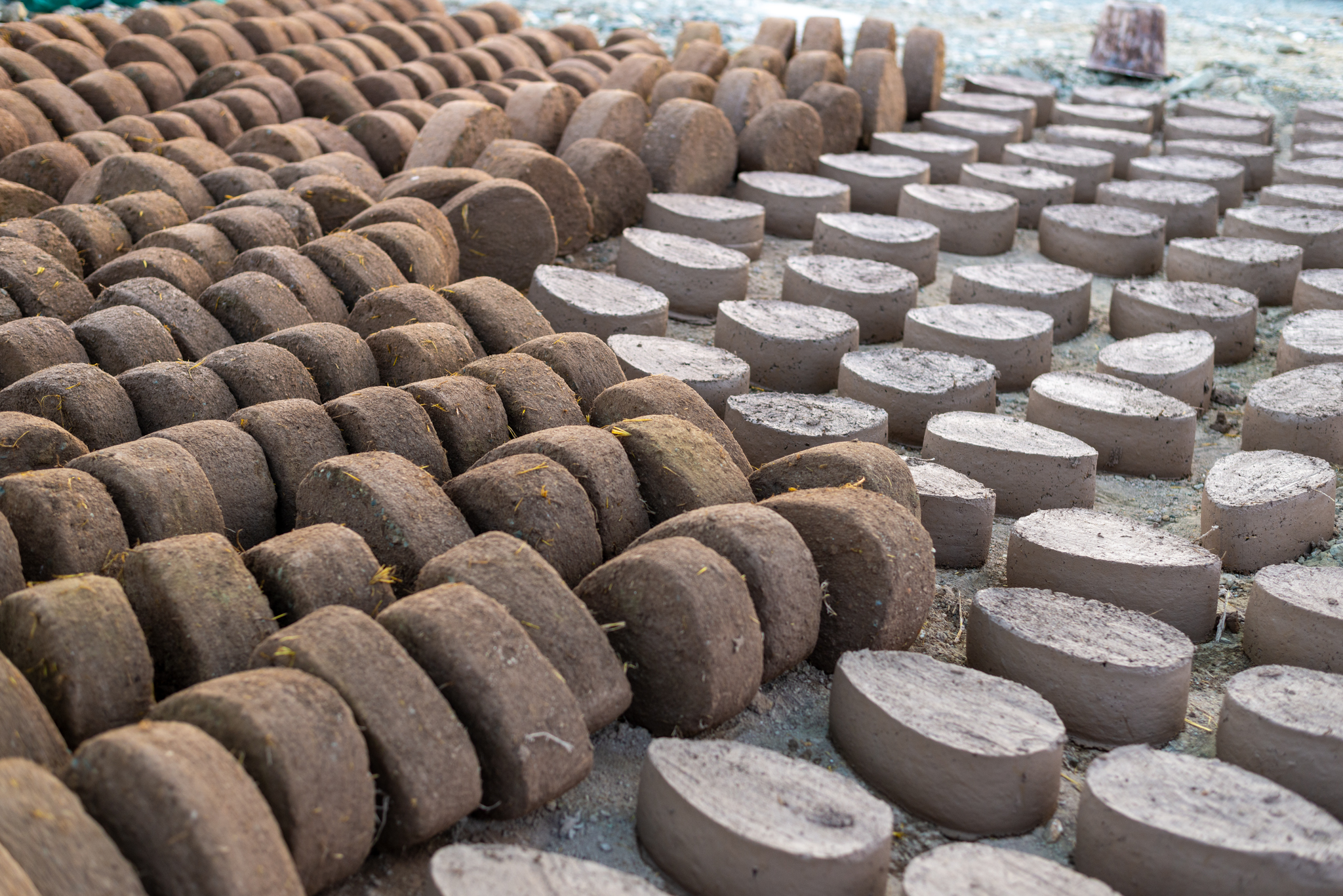
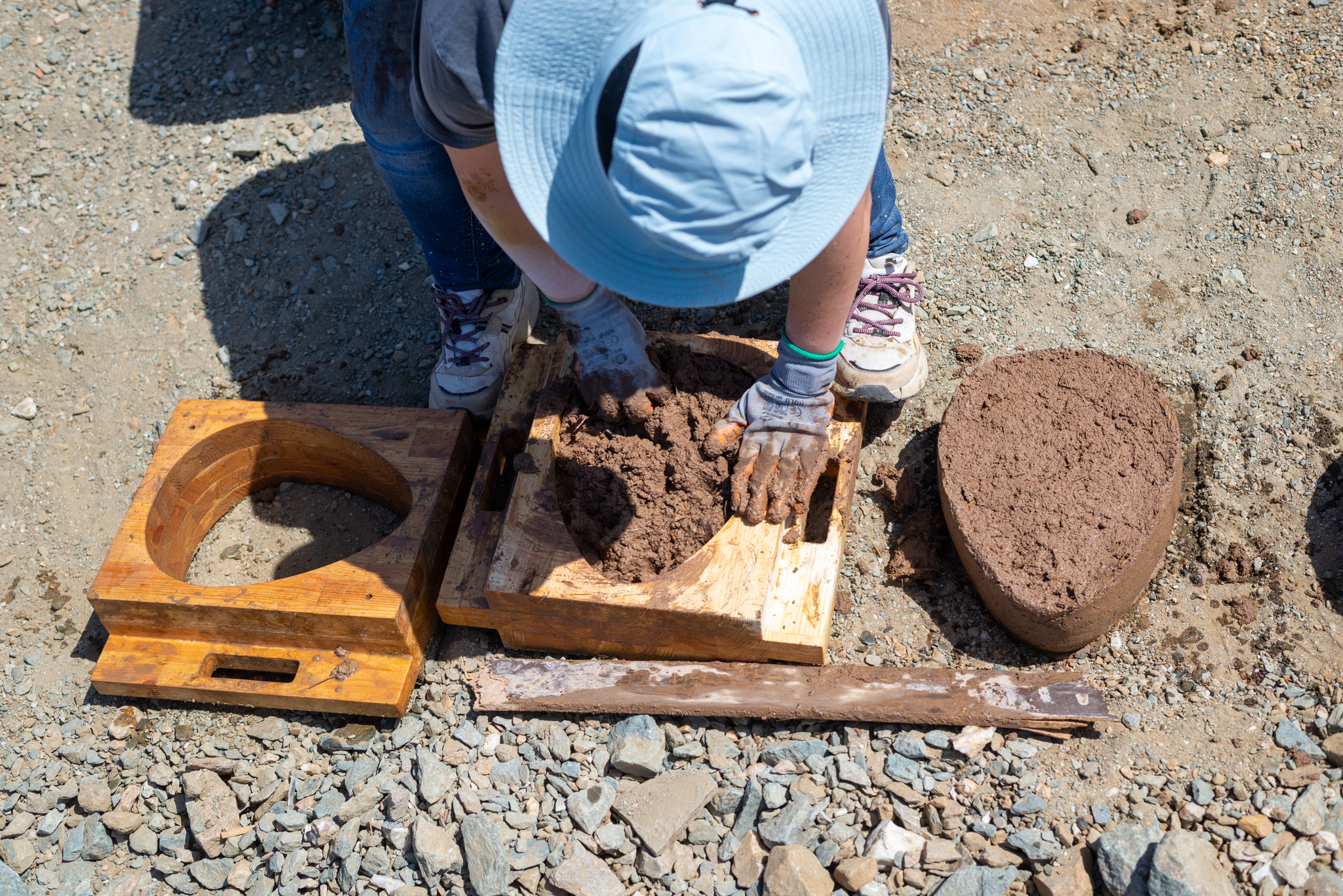
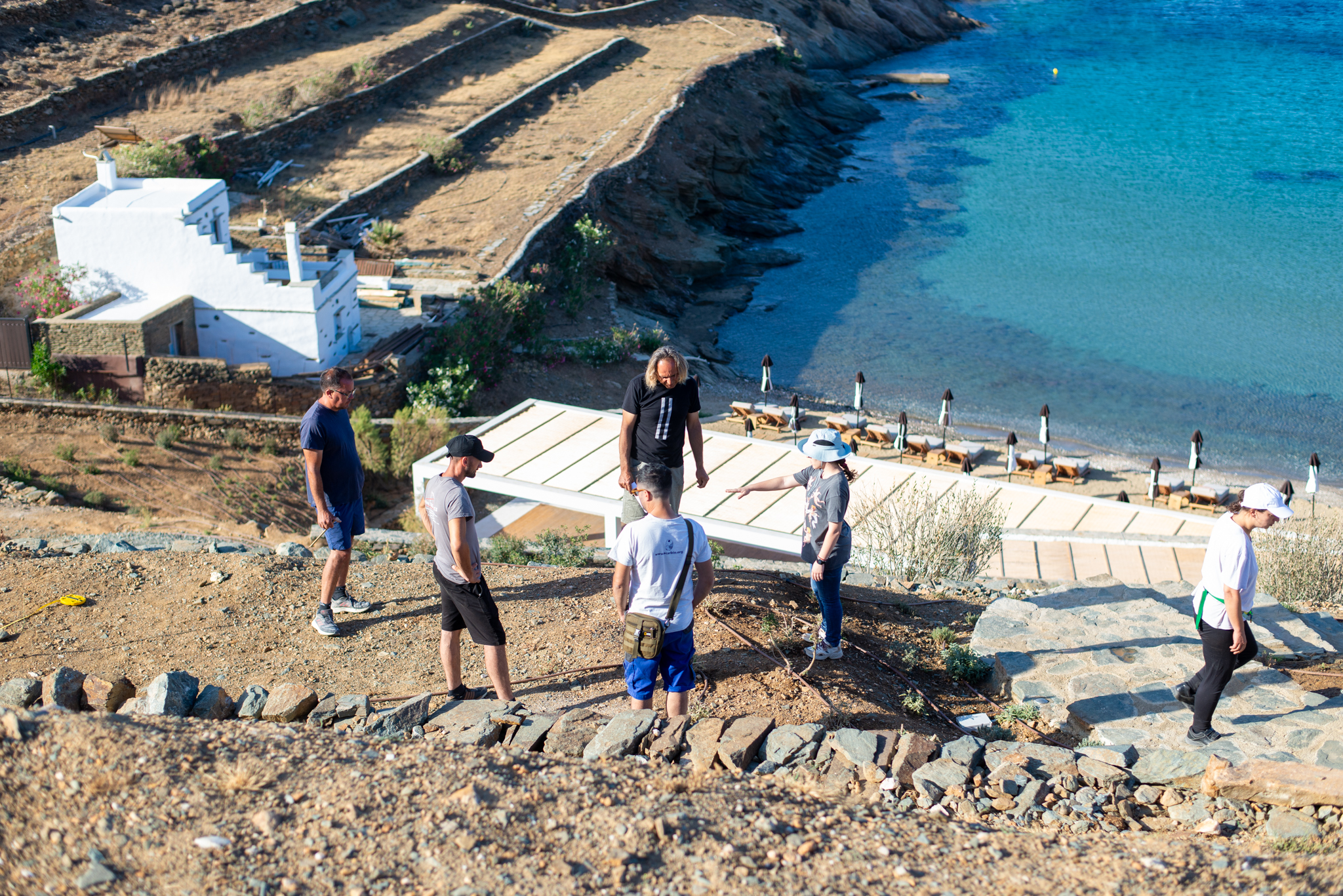
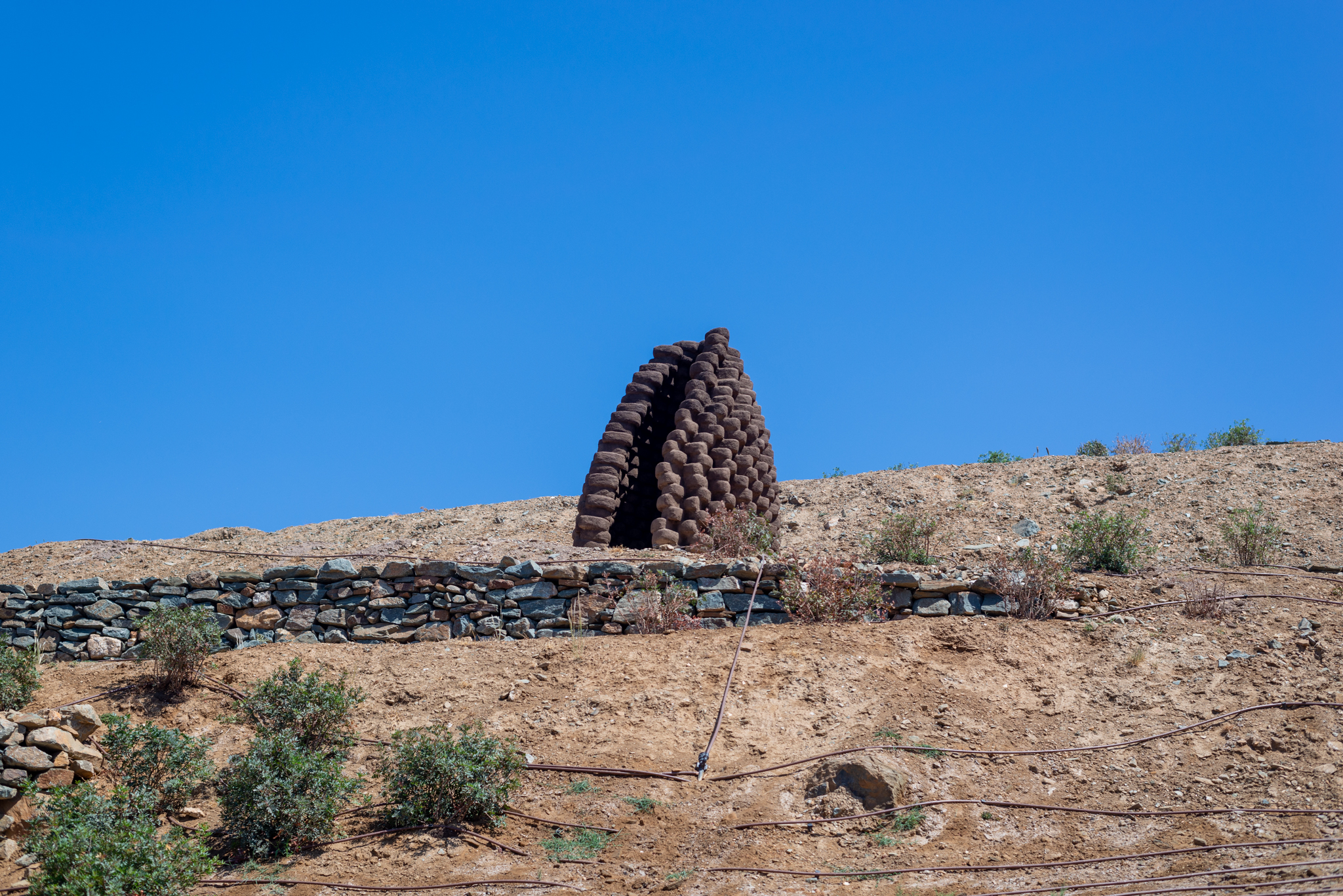
WIND BREAKER is a natural built sculpture to inhabit, constructed in Tinos island in Greece. The piece is a structure made from stabilized adobe bricks with hydraulic lime, produced on-site in specially designed wooden molds of specific shapes. It is located in a spot where one can see it from all sides while descending the path towards the beach. If someone wishes, they can approach it, enter it to shelter from the strong Tinian winds, meditate, and relax while gazing at the sea. It is inspired by the structure of the artichoke, a characteristic local vegetable of Tinos.

Video documentation link.

images (c) Ioannis Koliopoulos

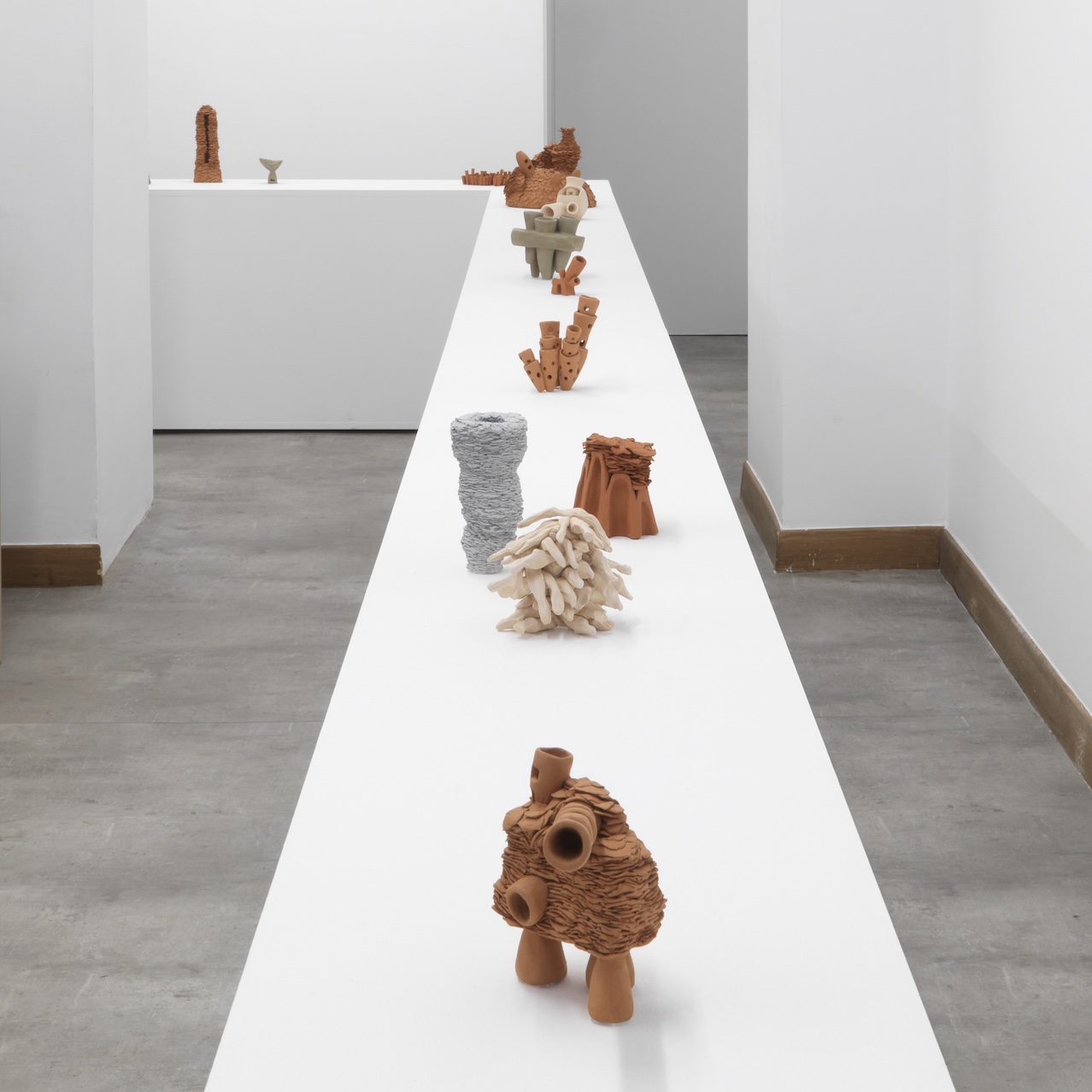
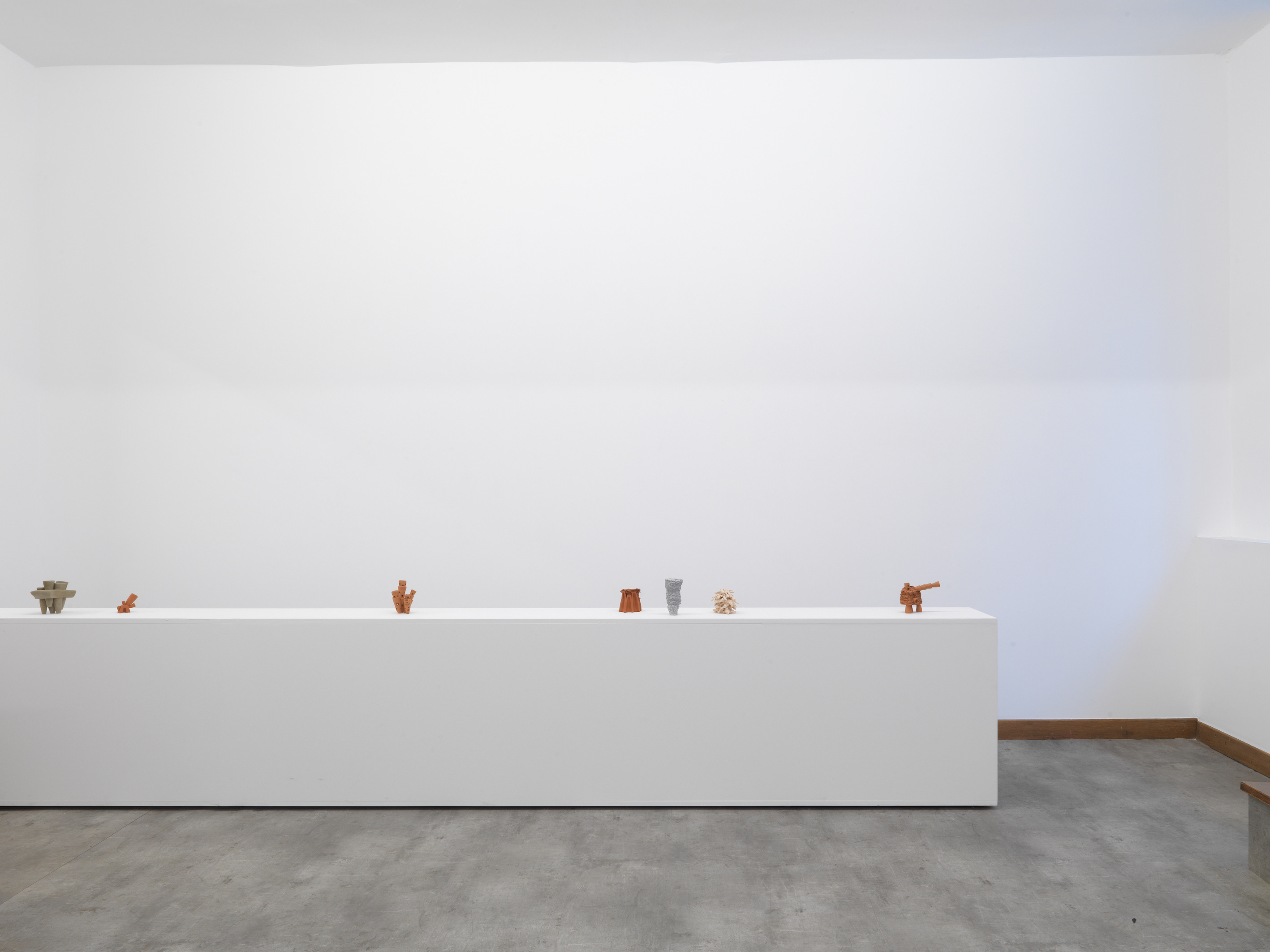
WE NEED TO DO MORE: magical thinking, 2024

solo exhibition, curated by Olympia Tzortzi @Callirrhoë, Athens

Considering the multifaceted interpretation of the phrase „we need to do more: magical thinking,» Paky Vlassopoulou embraces the notion of magical thinking associated with children’s immersion in fantastical imaginary worlds. This understanding facilitates the development of children’s ability to perceive and interact with the world from diverse perspectives. Through the embrace of magical thinking, children can explore imaginative realms, fostering nuanced understandings of reality. In line with this concept, the artist proposes to revisit this state of mind by creating shelters for various creatures, aiming to cultivate a sense of security and belonging.

(read more)

images (c) Stathis Mamalakis

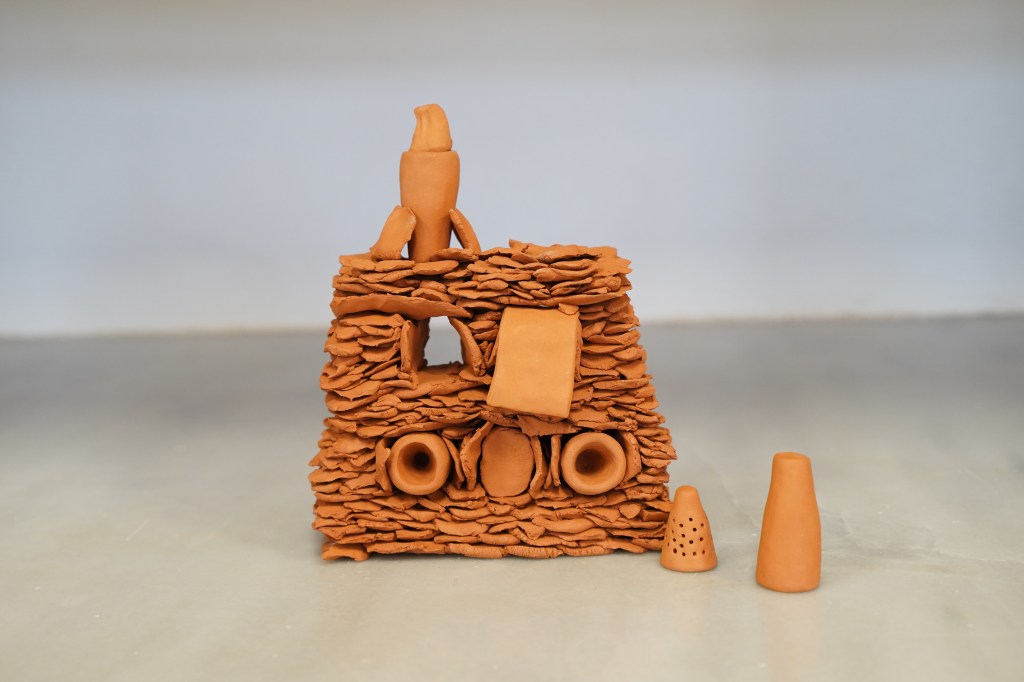
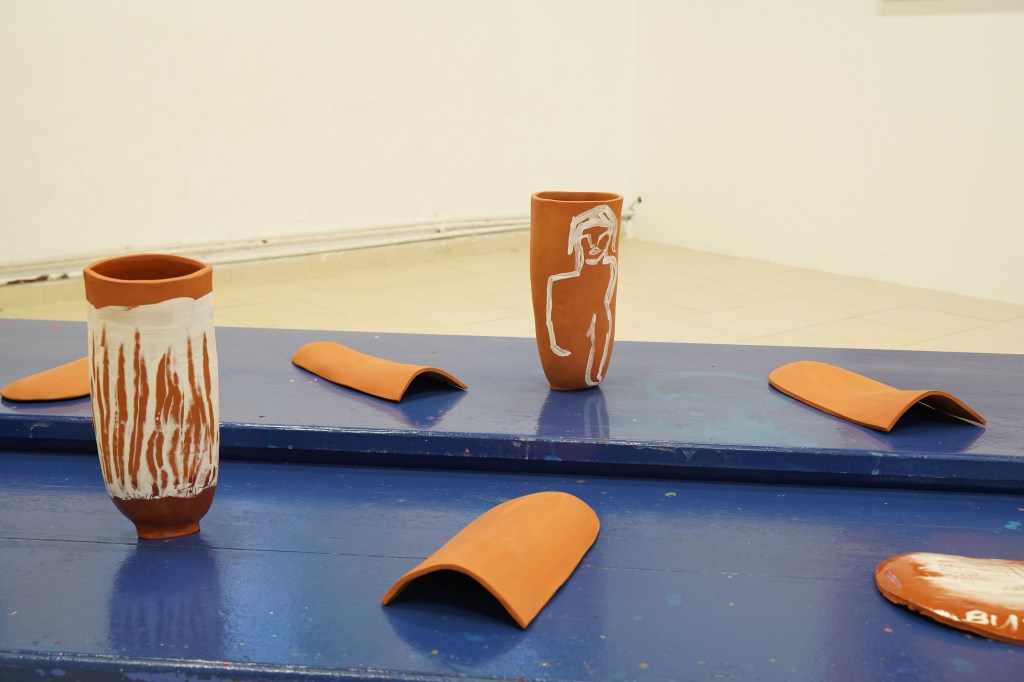
Thermia Project Residency 2023 in Kythnos Island Greece, curated by Odette Kouzou

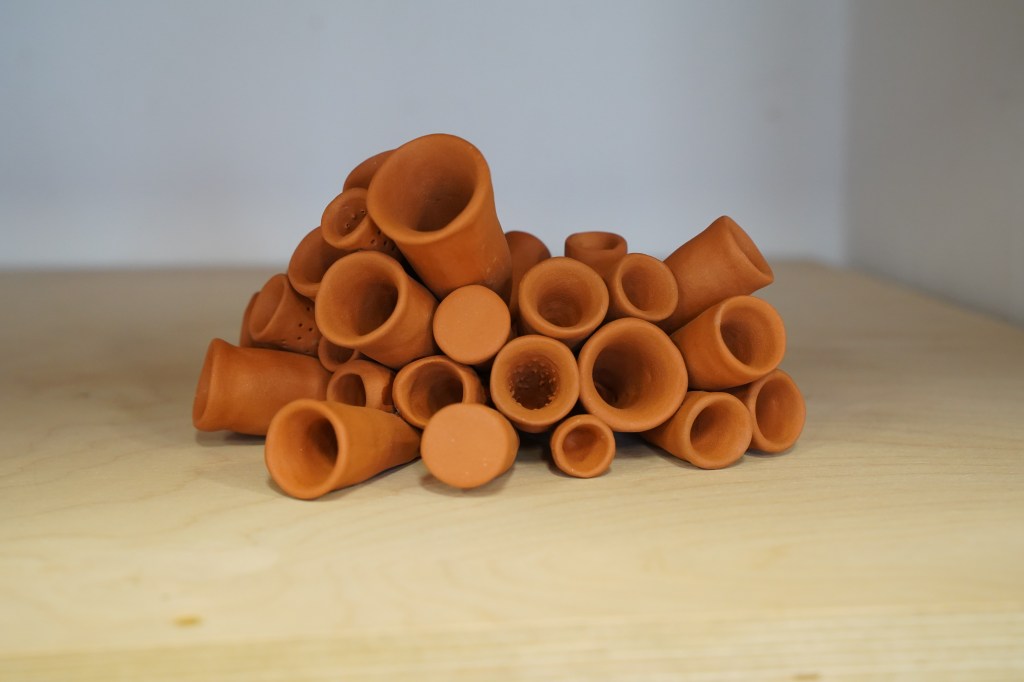
Paky Vlassopoulou’s works relate to practices for the prosperity of the “oikos” and the community of bees, the economy of household, and the ways in which humans and bees communicate. The inspiration stems from a mediaeval British custom, called “telling the bees”, in which the family calls upon a beekeeper to inform the bees about the death of a family member, building a relationship of involving the bees in the mourning process. According to this ceremony, the grieving bees assist the passing of the dead to the “other side”, while offering a generous harvest of honey to the family. On the other hand, the bees that have not been told the news, cease to produce honey, or leave the beehive, or even suffer a collective death. Vlassopoulou is inspired by the traditional ceramic beehives in the shape of a cone, reminiscent also to thimbles, and hand-made roof tiles which, when placed across each other hint to the form of a beehive, thus connecting the concept of ‘protection’ with ‘residence’, ‘community’, and who has access to it.

images (c) Dimitris Kokkinogenis & Thermia project

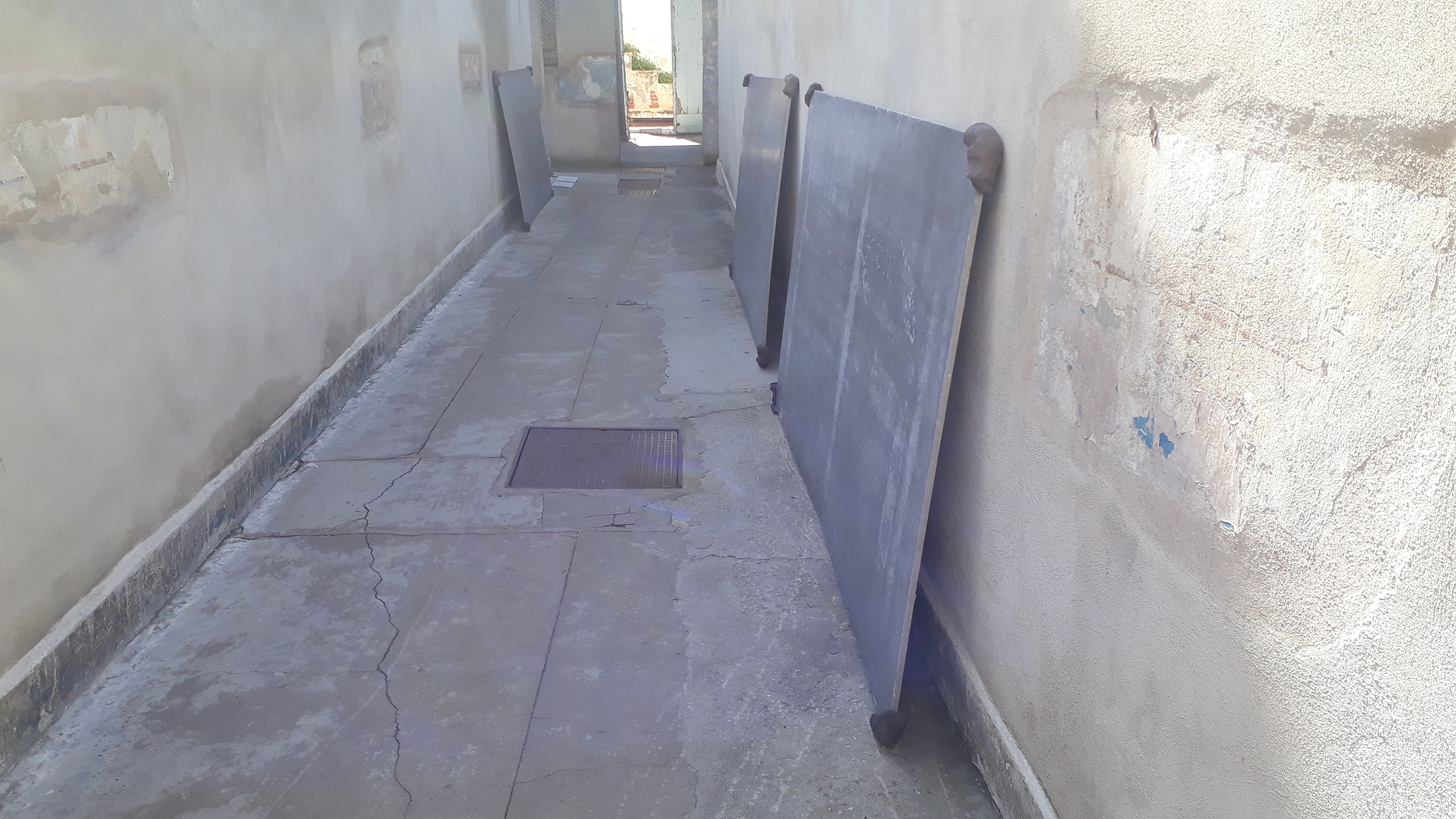
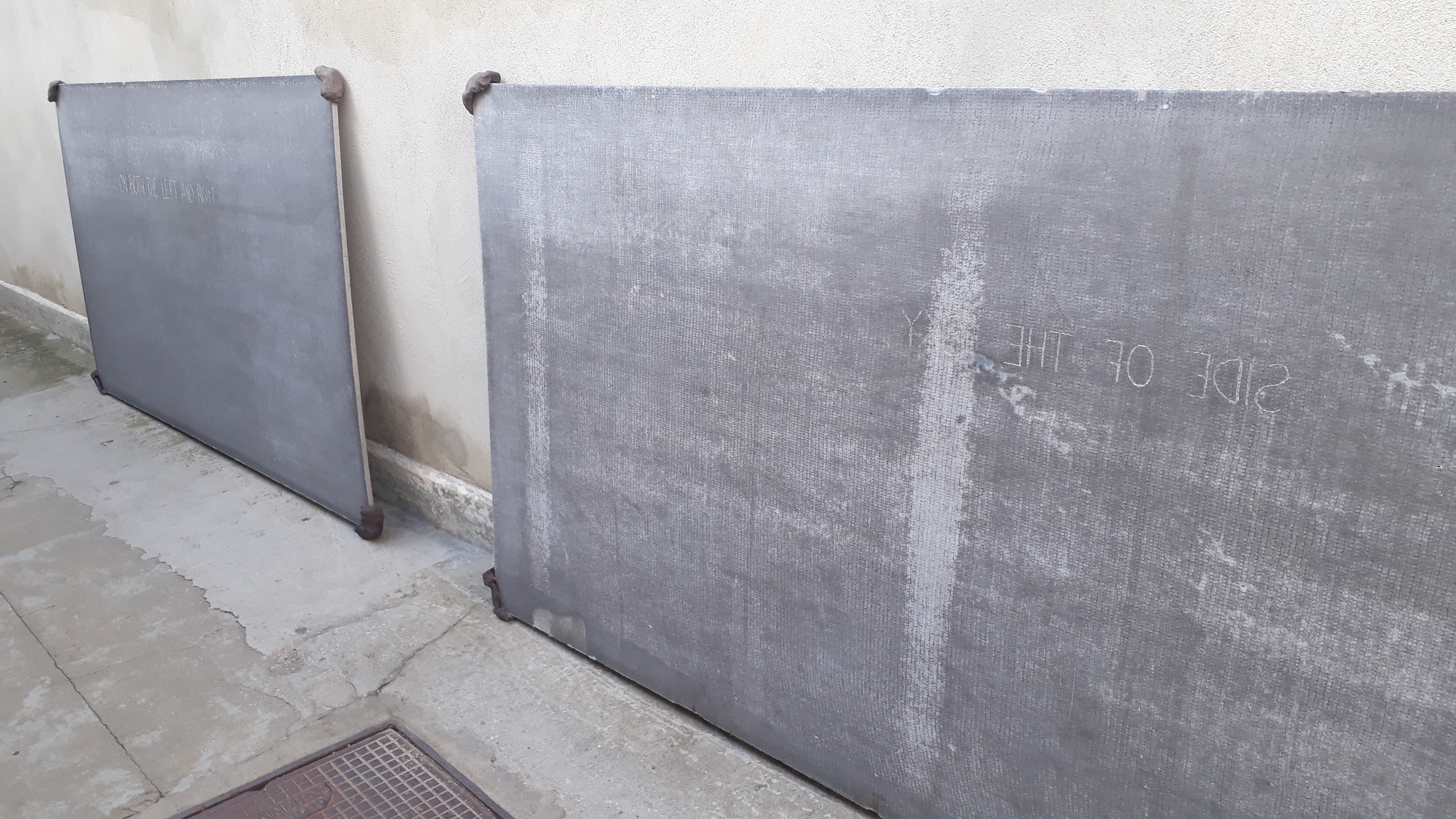
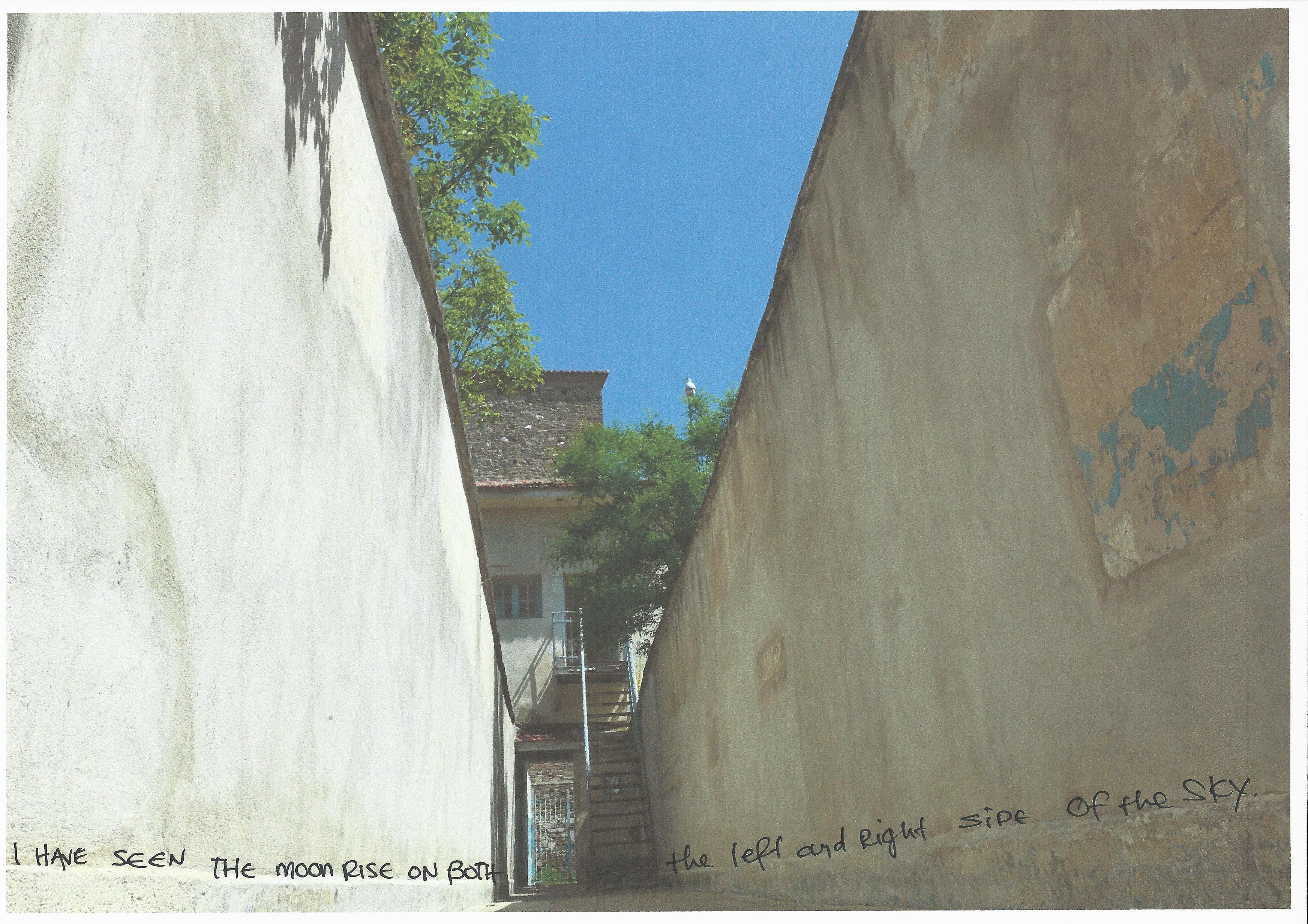
I Have Seen the Moon Rise on Both the Left and Right Side of the Sky, 2023

in situ installation at the Eptapyrgio Fortress, Thessaloniki for the 8th Thessaloniki Biennial

The title of the work, is borrowed from the autobiographical book by the Kurdish-Iranian writer and filmmaker Behrouz Boochani, in which the author recounts his journey, in 2013, alongside other refugees from Indonesia to the Australian external territory of Christmas Island, resulting in Boochani’s four years imprisonment in a migrant detention facility on Manus Island, Papua New Guinea.

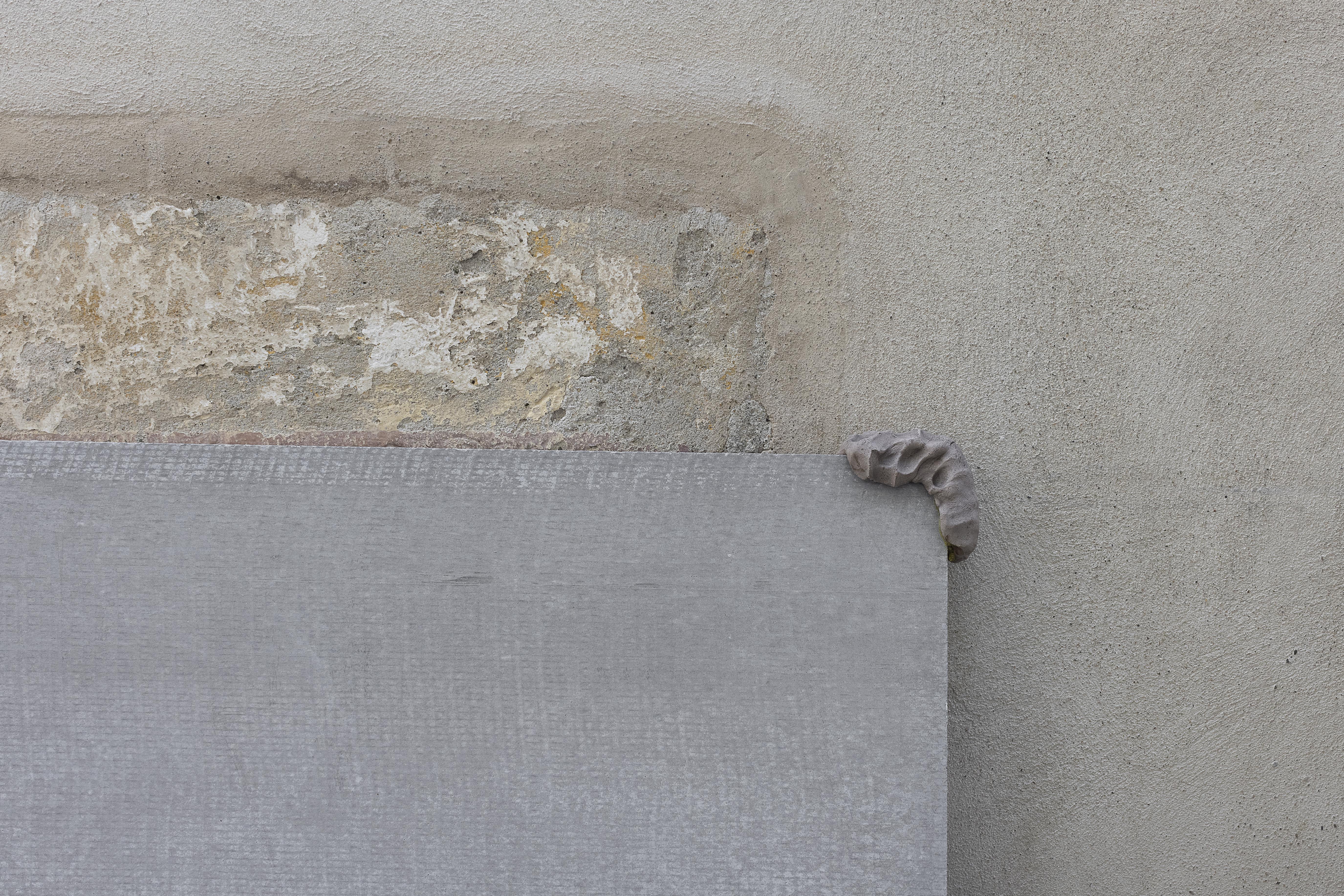
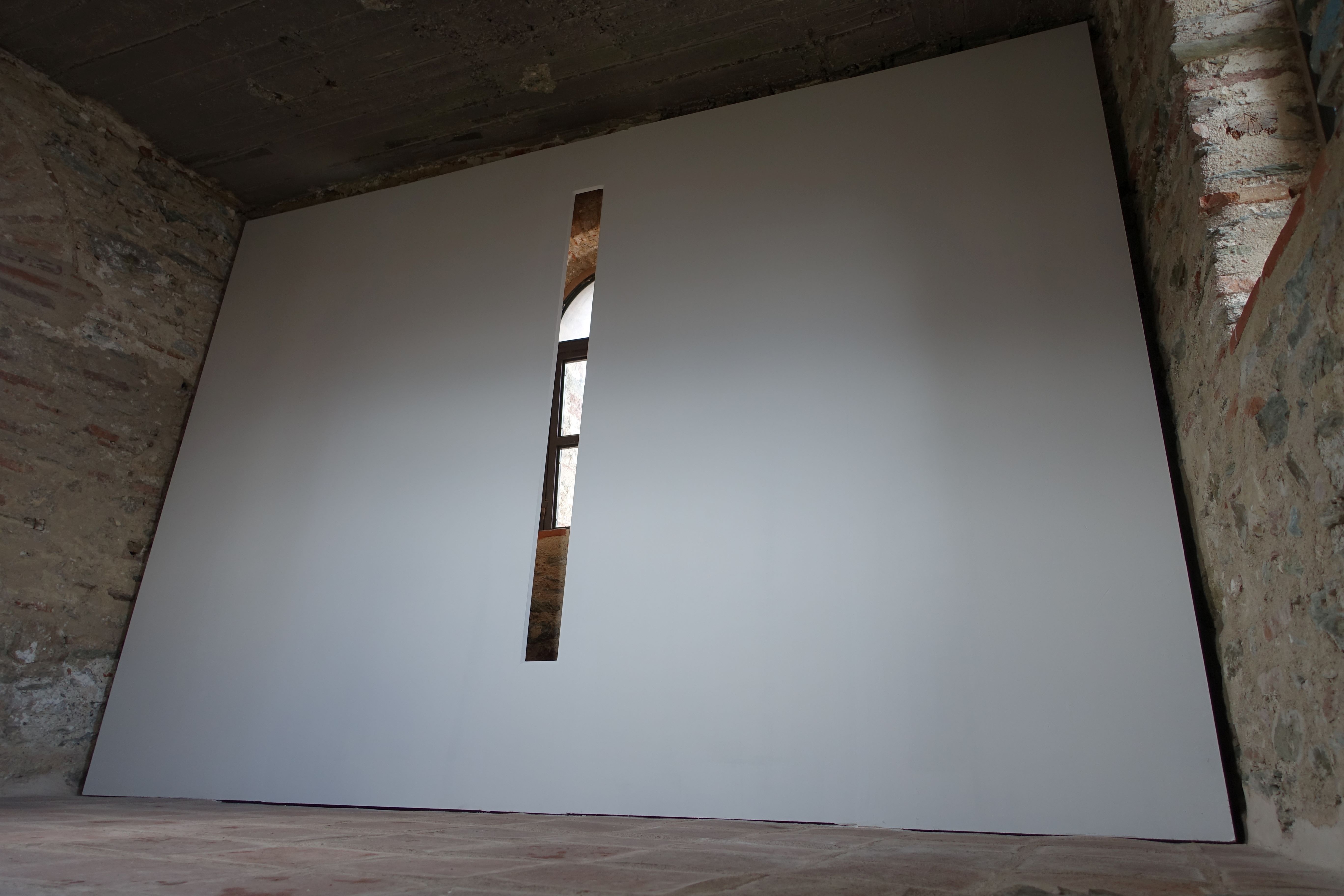
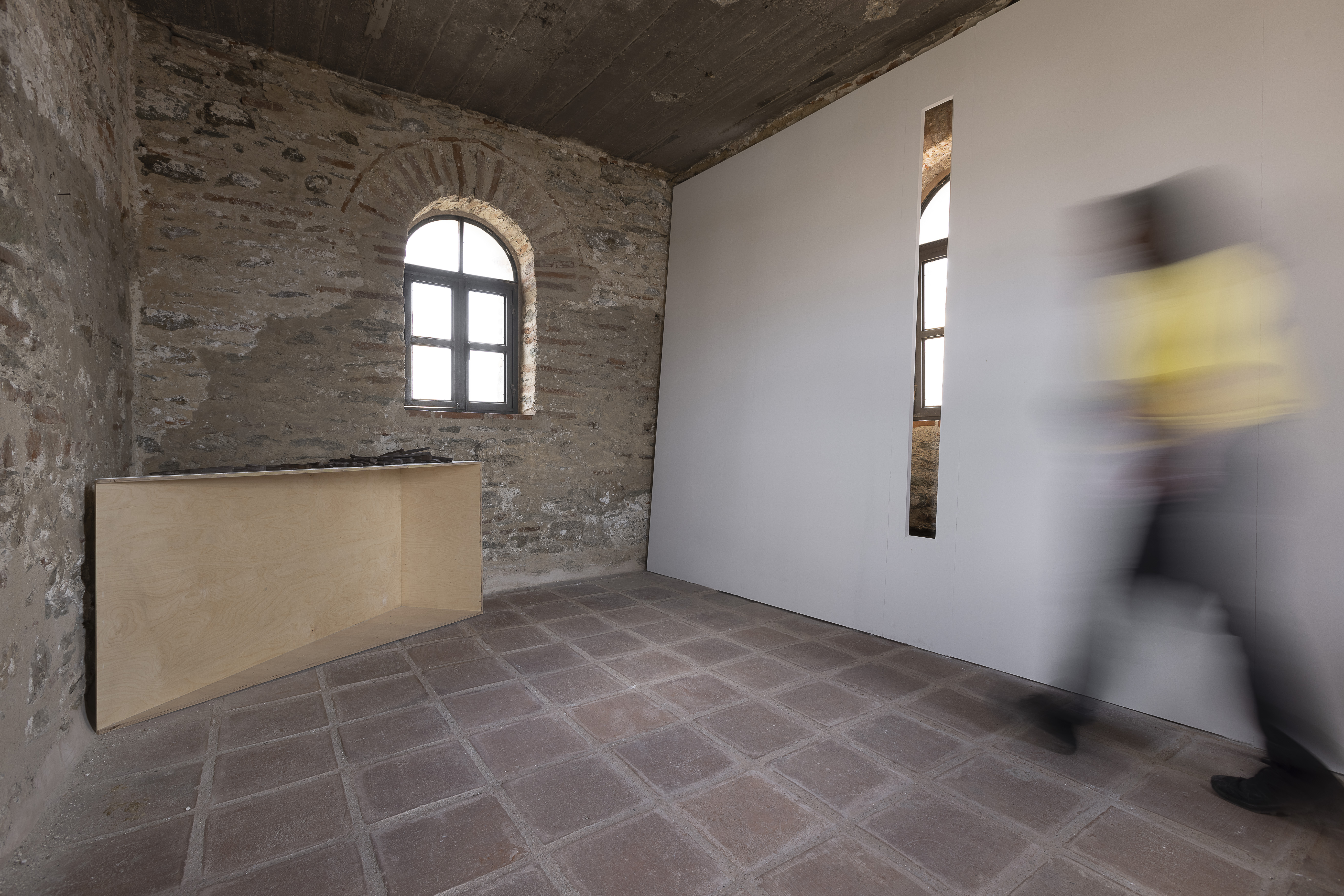
Vlassopoulou’s sculptures explore notions of utility and physicality. The concrete boards set up by the artist create a sense of entrapment and disorientation. The writings on the temporary walls, along the external corridor, refer to the engraved words in the cells of Eptapyrgio, but also to the various markings on trees and benches which serve as presence-declarations. The ceramic spoons and forks, displayed in the enclosed space of the tower, represent a crucial technology for survival. By virtue of their varying sizes, Vlassopoulou suggests their multiple uses, these eating-utensils can also open wedges: for salvation, helping a prison mate widen a window slit; open a door slightly ajar; who knows, even transform inside into outside.

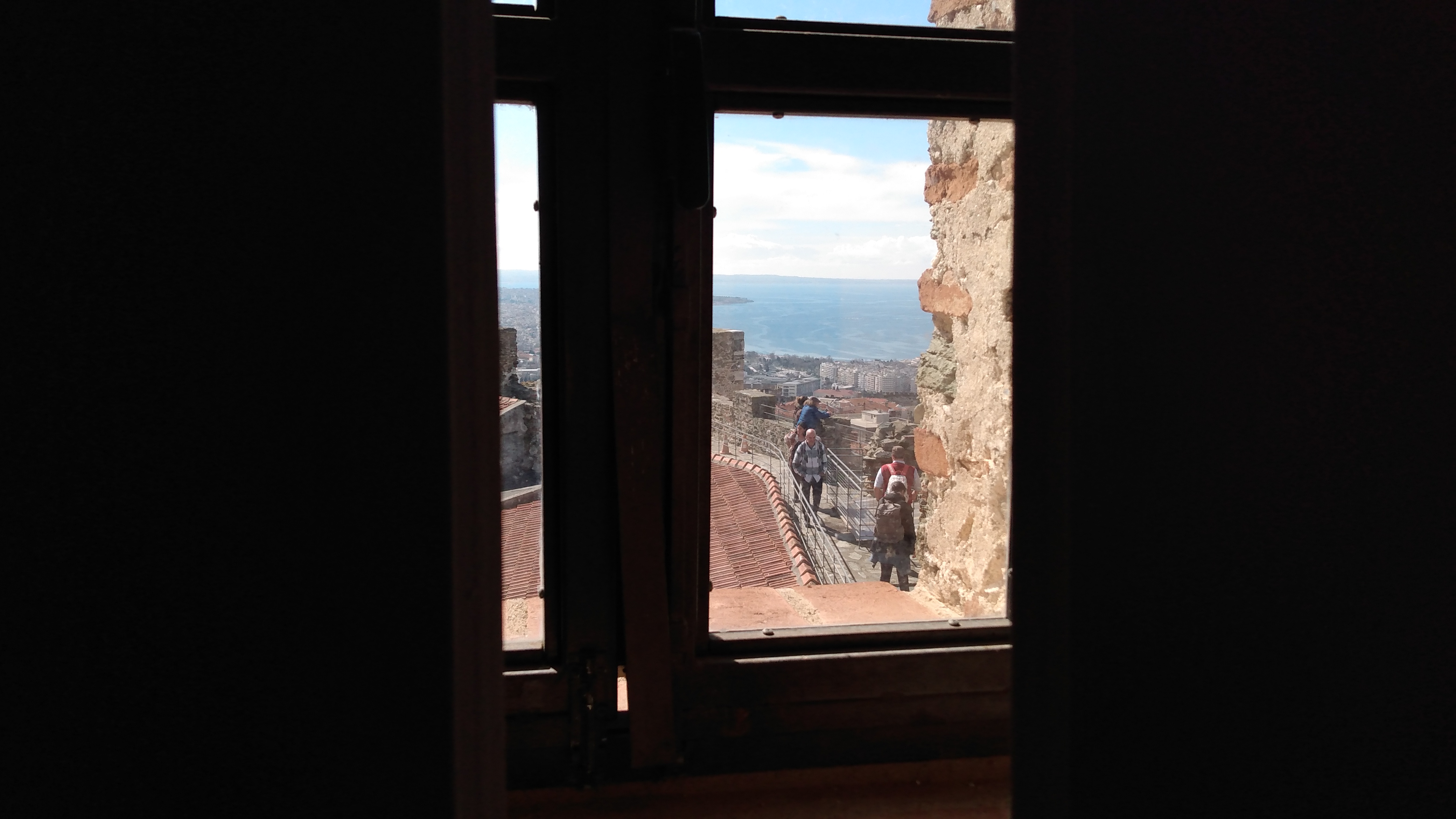
The slit seen in the panel Vlassopoulou created inside the tower is based on the architectural designs of the federal prisons of Chicago, completed in the mid-1970s, Vlassopoulou recreates the minimal opening of the cells’ windows. Slits, in the skyscraper-type correctional institution, are only 2,1 meters-high and feature an opening just 130 mm wide on the concrete walls. This opening is narrow enough to make additional bars redundant, but also wide enough to allow natural light to pass through. Her own constructions are supported by the existing wall. She is interested in this leaning on, this point of contact. The work does not occupy the space, but instead relies on it. Like the former refugees from Asia Minor, who in order to avoid the construction of an extra wall, built their houses parasitically onto the pre-existing walls of the Yedi Kule.

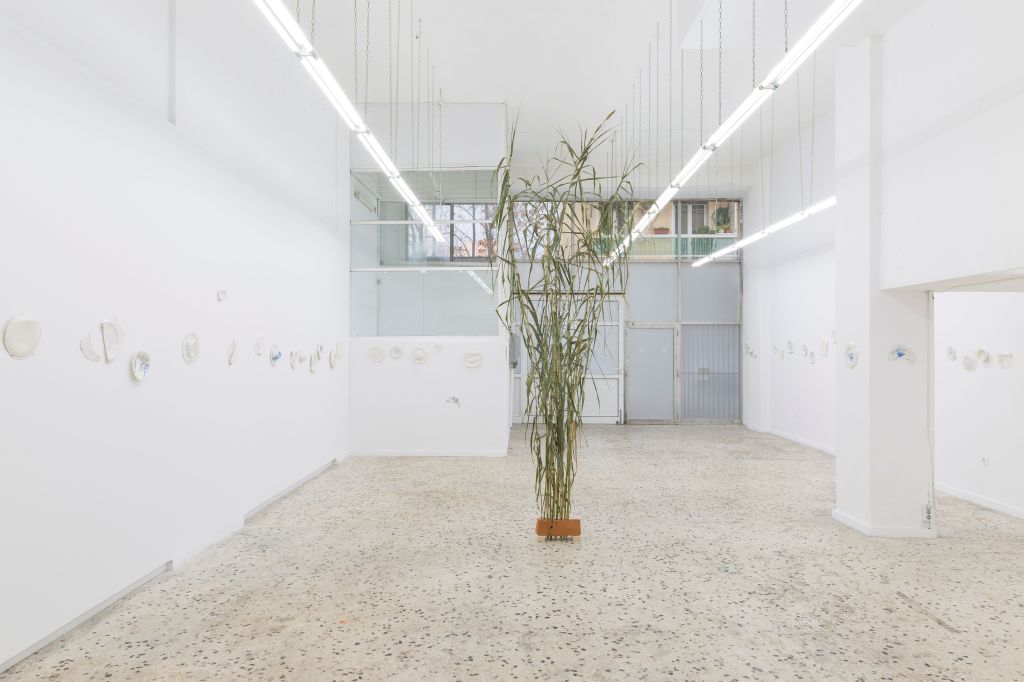
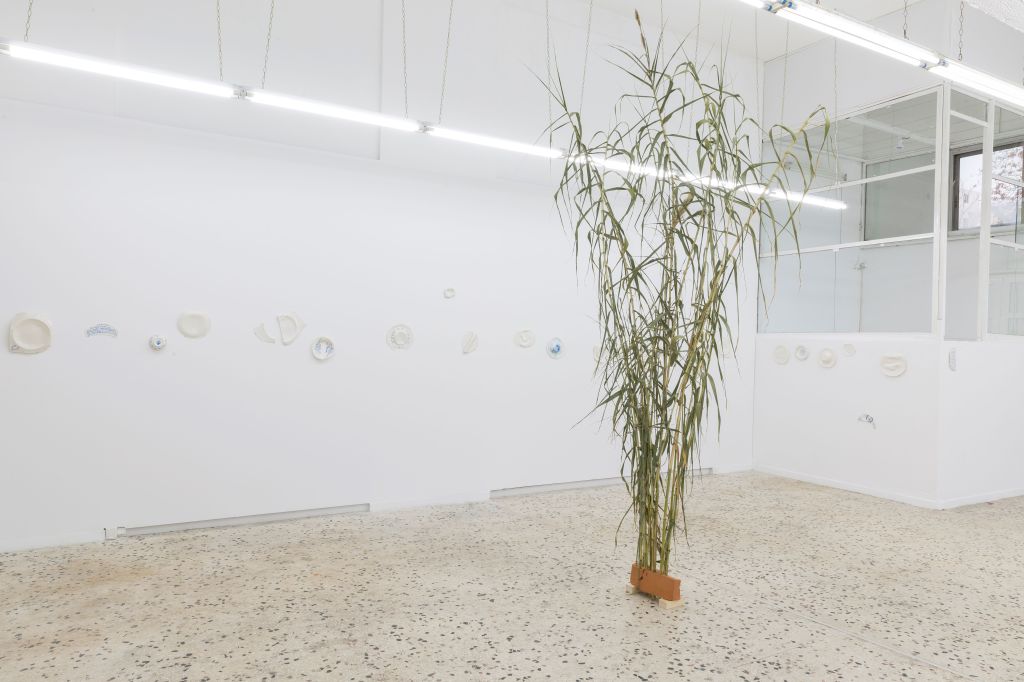
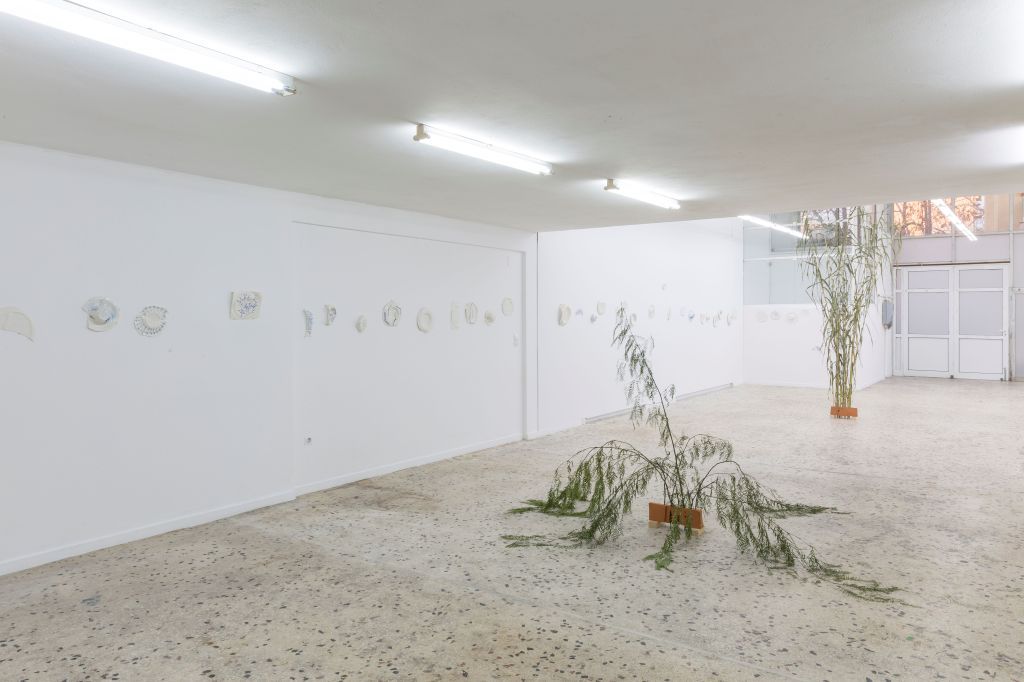
A day after a day after a day after a day, 2023

solo exhibition, curated by Florent Frizet @One Minute Space, Athens

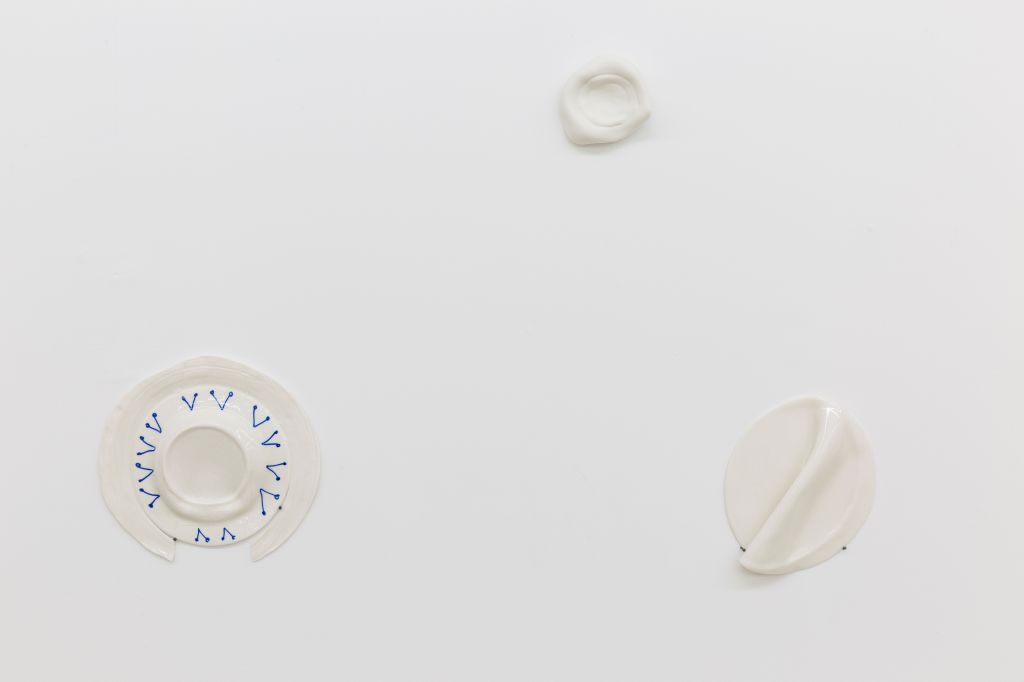
This body of work takes as a starting point Vlassopoulou’s research on Leros island, located in the east of the Aegean Sea and only an hour off the coast of Turkey, and its histories of multi-layered confinement. Leros has a long history of incarceration rooted in its exemplary landscape defined by water and unique architectural heritage. In the area of Lepida, military barracks built during the Italian occupation (1912-1943), have been reused ever since as indoctrination institutions in post-Greek Civil War era (1948-1964), prison cells for political dissidents during the military junta (1967-1974), mental healthcare facilities (1958-today), and refugee camps, known as hotspots (2016-today). Last year, right above the existing infrastructures, on top of the hill, a new controlled refugee camp, with barbed wire fencing, surveillance cameras, x-ray scanners and magnetic doors and gates, was built.

Thinking of the common living conditions of all these very different cases of unwanted bodies, Vlassopoulou is drawn to the plate as an object widely recognized as a symbol of sustenance and as a domestic object linked to material culture. She creates multiple porcelain plates to carry words, lines, scratches. Each plate acts like a journal entry documenting numbers of confinement. In the exhibition space, the plates build up a storyline through drawings, notes and quotations. 

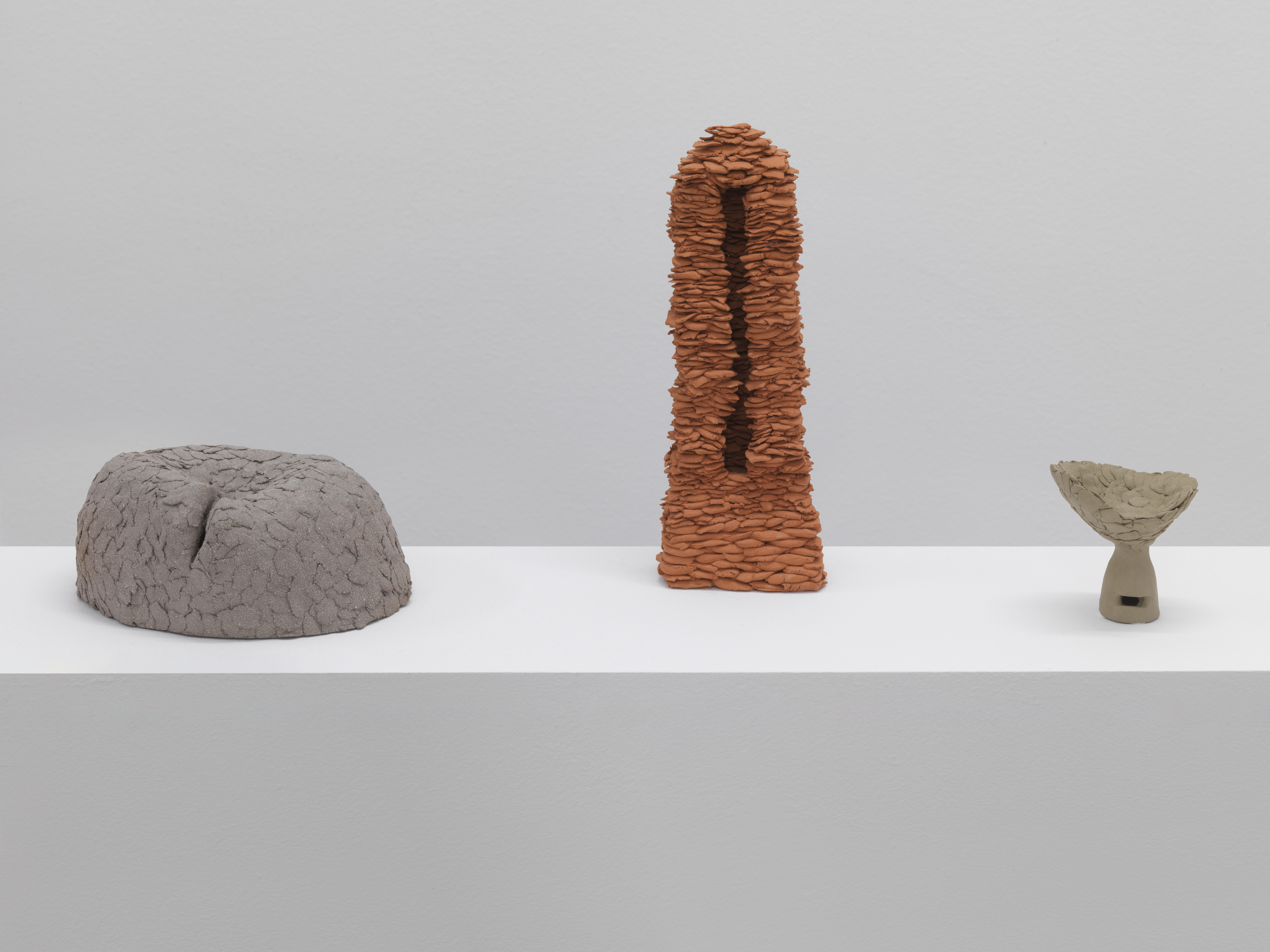
In the middle of the space, two sculptures refer to the marshy ground and the natural flora that surrounds the facilities at Lepida. Although nature is often associated with a sense of freedom, in the case of the inmates the feeling can be very different. The plants act as an additional barrier to a possible escape and exacerbate the feeling of fear.

A day after a day after a day after a day serves as a cognitive and sensorial experience on placement and displacement.

images (c) Thanasis Gatos
To love the hibiscus, you must first love the monsoon, 2022

@Weather Engines, curated by Daphne Dragona & Jussi Parikka

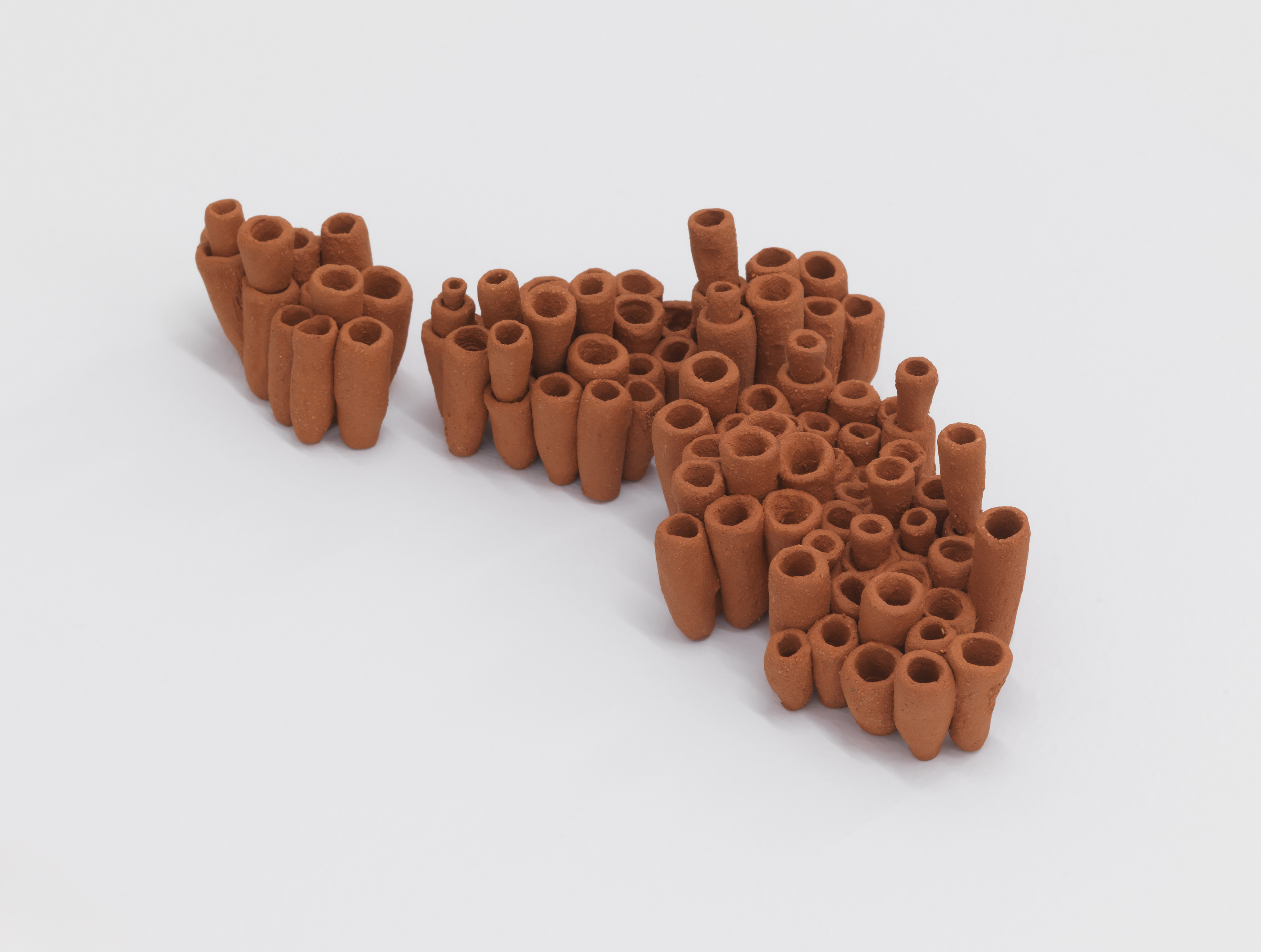
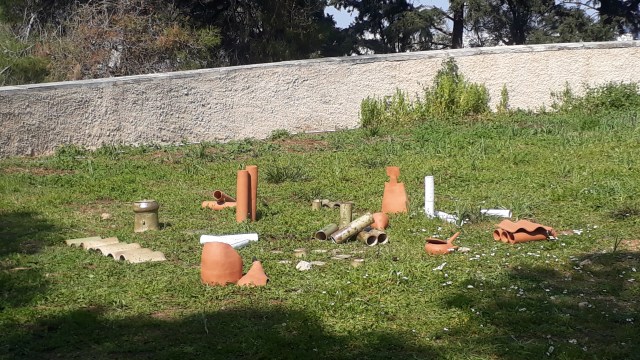
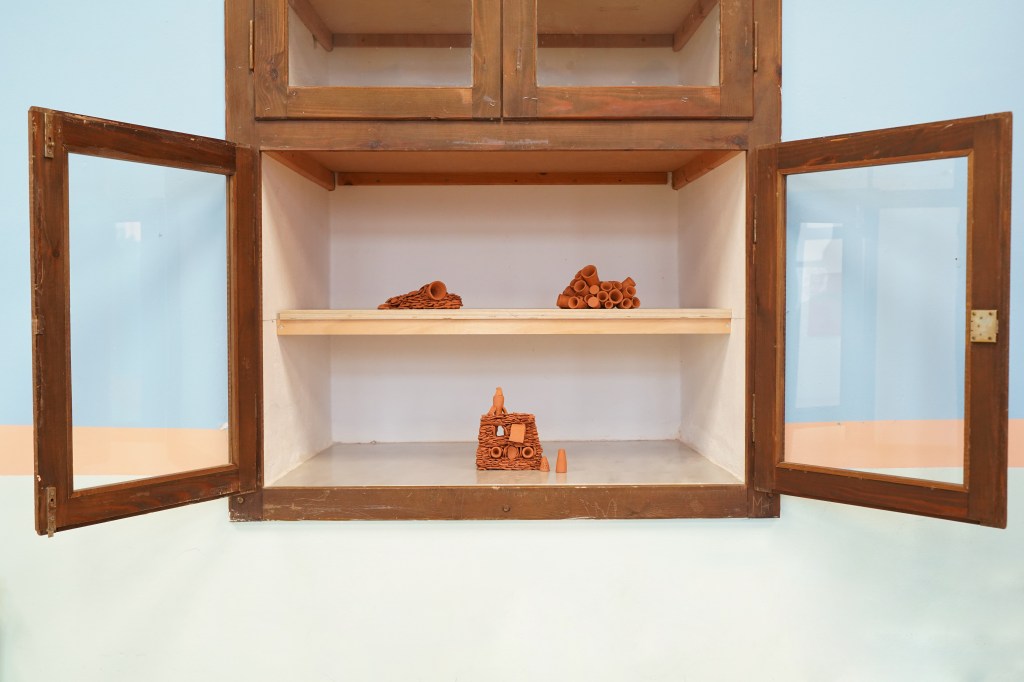
Water is a regulatory factor not only for the climate but also for life on the planet. Today’s higher temperatures and often extreme weather conditions affect the availability and distribution of rainfall, snowmelt, river flows, and groundwater. This also further deteriorates water quality. The work “To Love the Hibiscus, You Must First Love the Monsoon” is a composition of objects that refer to water collection, transport, and storage. Tiles, pipes, filters, vessels, and funnels that seem to be complete or broken, industrial or handmade, of the past or the present are found on the ground as fragments of water infrastructures and utensils. They point to the use, waste, or shortage of water, whereas their placement highlights the connection between water, ground, vegetation, and life. The title of the piece is a line from Hala Alyan’s poem “Thirty” and refers to the need to confront a system larger than ours.

Bread, 2020

commissioned by TAVROS, in collaboration with Elisavet Koulouri (baker) and A Whale’s architects /Iris and Leda Lykourioti (architecture office )

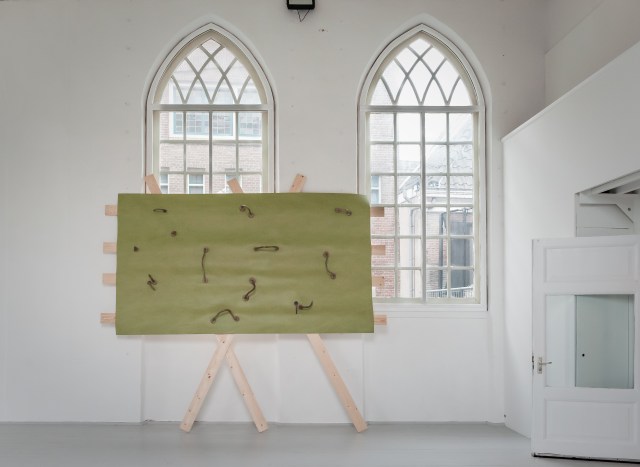
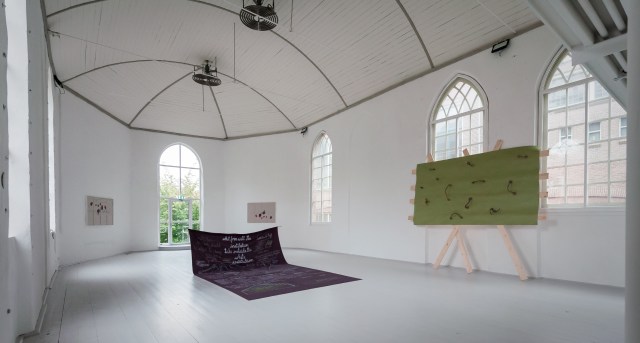
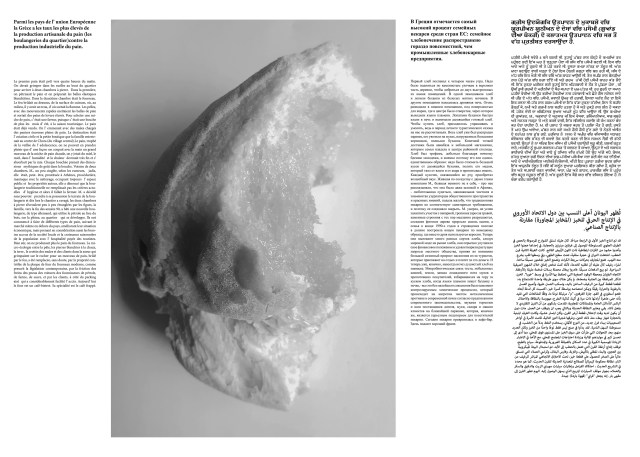
How the chemical reactions that form the invisible micro-architecture of connections and disconnections that erupt into bread are metaphors for the complexity of our political interactions as the body politic vibrates and demands. Grain, cultivation, city states and the written word were after all born concurrently. The complexity of the biological and the political are explored, through bread, with words? The newspaper is a response to a need (or a want) for us all to be in touch, to touch, to be touched. So that our senses, currently denied a common response to matter, can return to the haptic and mouths, tongues, words, language.
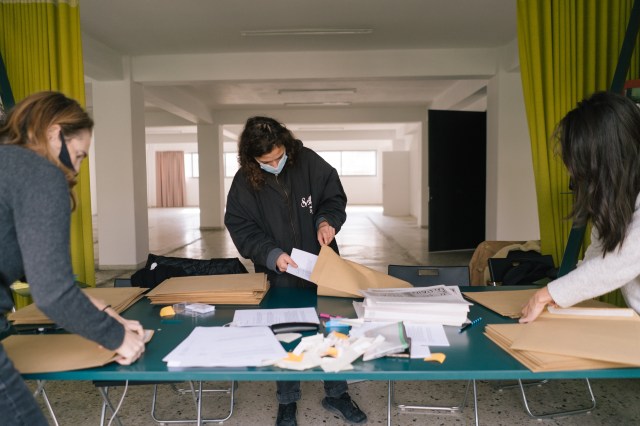
The texts appearing in the newspaper have been translated into the language of (almost) every community that resides in Tavros – Greek, Punjabi, Russian, Albanian, Armenian, Arab and French. It has been disseminated freely in bakeries in the broader neighborhood and has been posted to a group of colleagues and friends, while the city of Athens was in a lockdown.
Images by Alexandra Masmanidi

Training drills, 2019
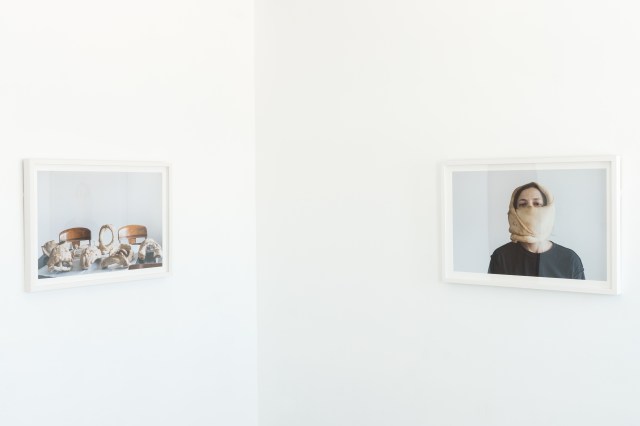
C-prints
memory of the world, 2019
marker on taverna table cloths
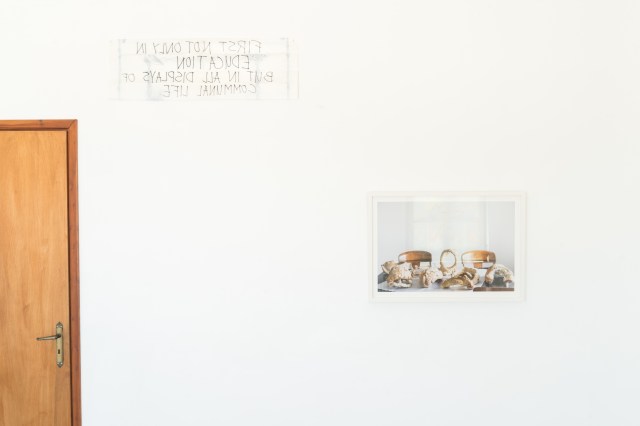
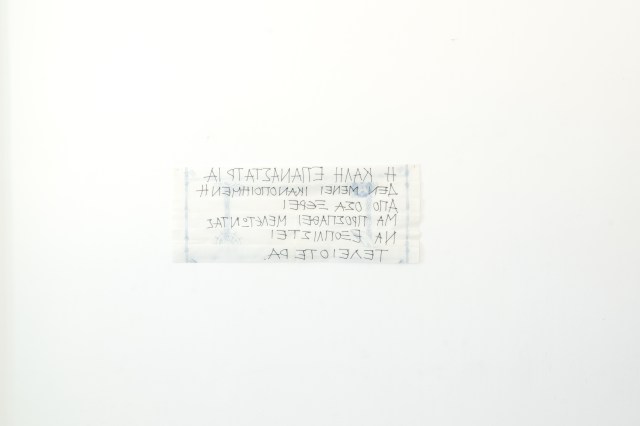
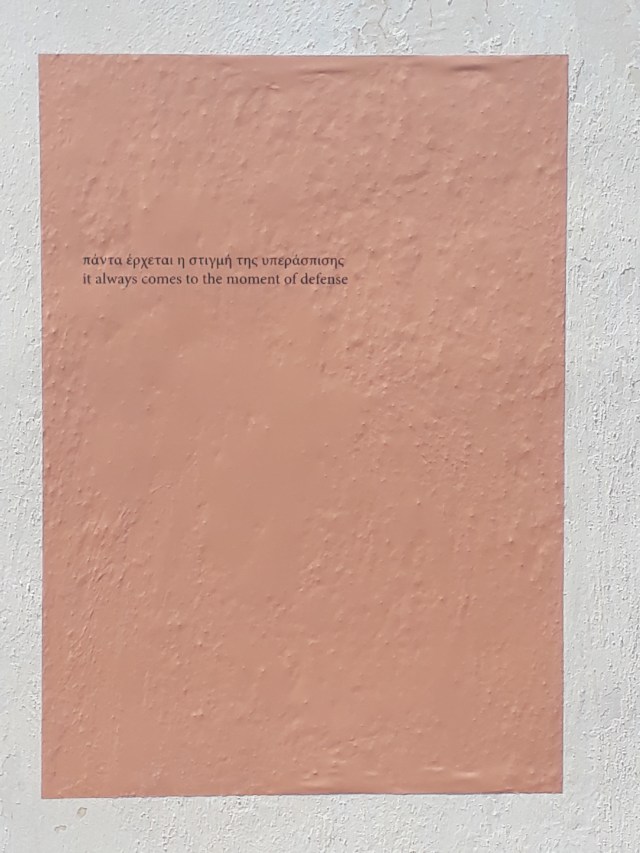
Slogans written by political exiles, on the walls of a self-organized school-room and dining room, in Anafi during the 1930’s.

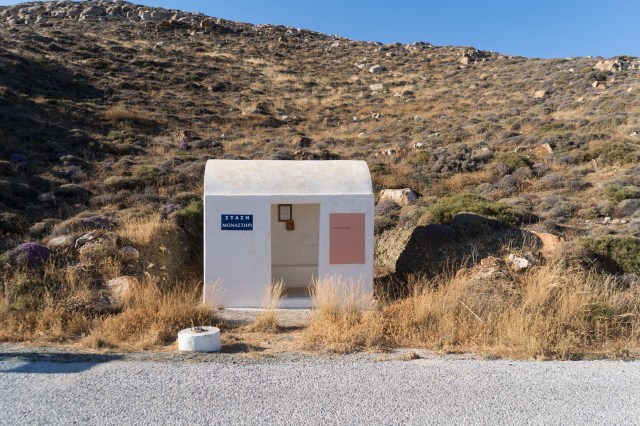
@Phenomenon 3, a biennial project for contemporary art held in the Aegean island of Anafi, Greece

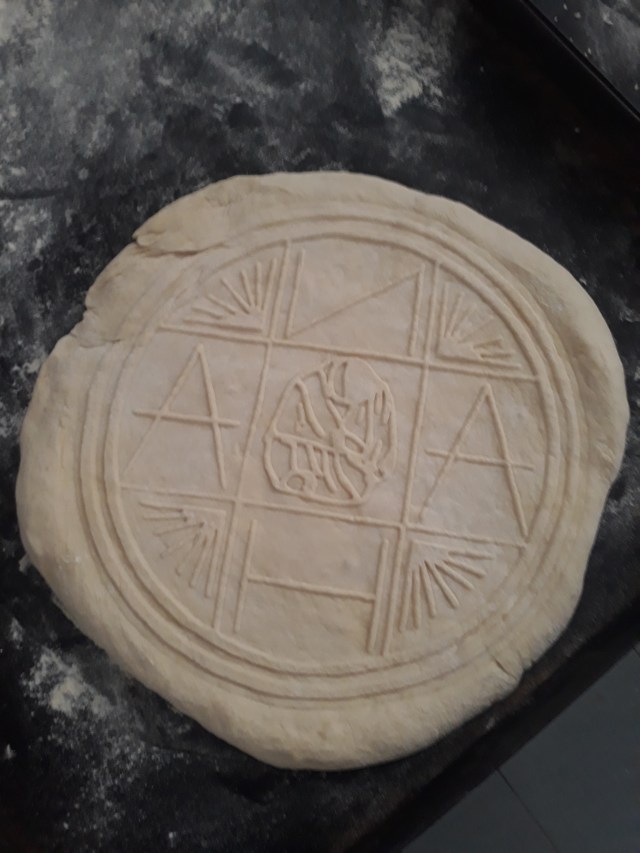
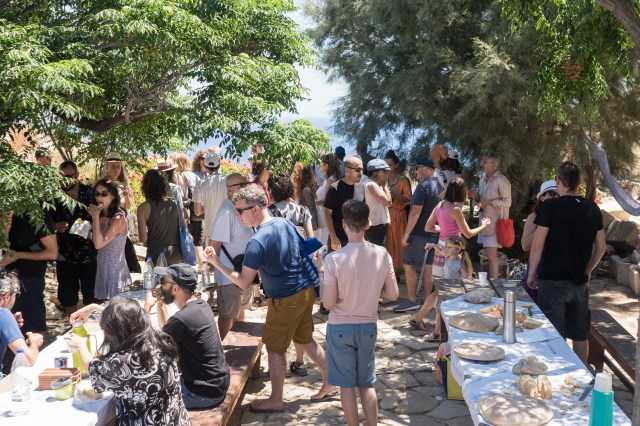
Part of the residency was a breakfast hosted at the ancient Apollo Temple – now the Christian Monastery of Anafi & a poster.

All images by Alexandra Masmanidi

Practising Pleasure Where Possible, 2018
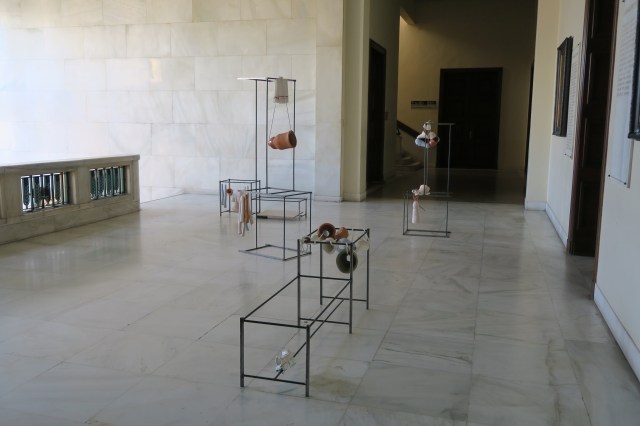
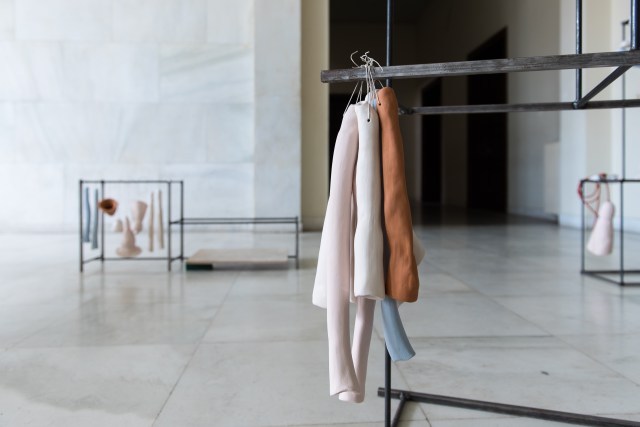
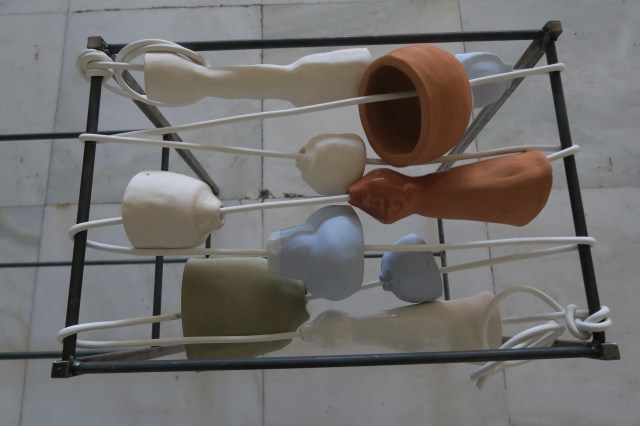
Ceramics, steel, electric wire, kitchen towels

@Geometries, curated by Locus Athens/ produced by the Onassis Cultural Center

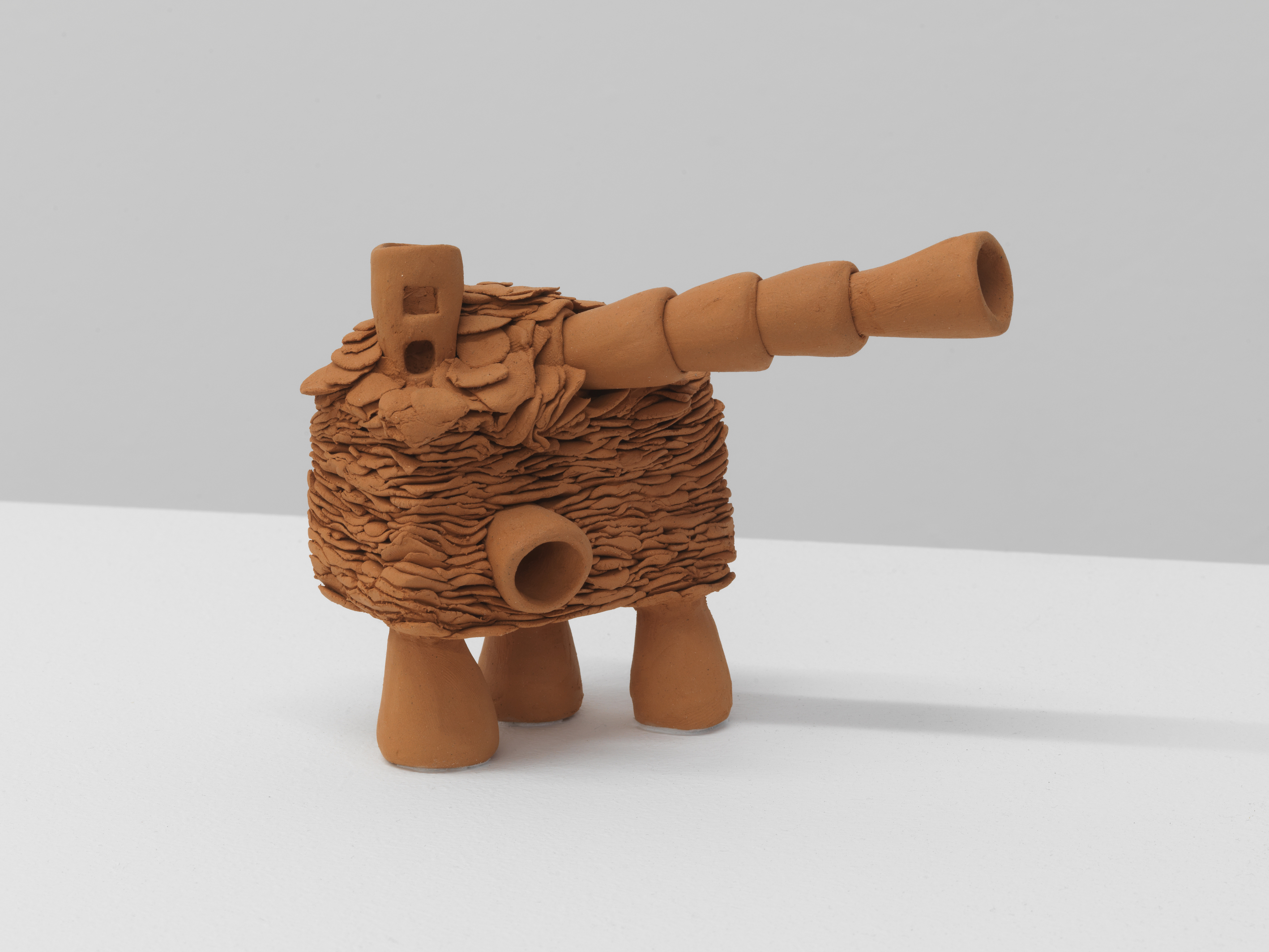
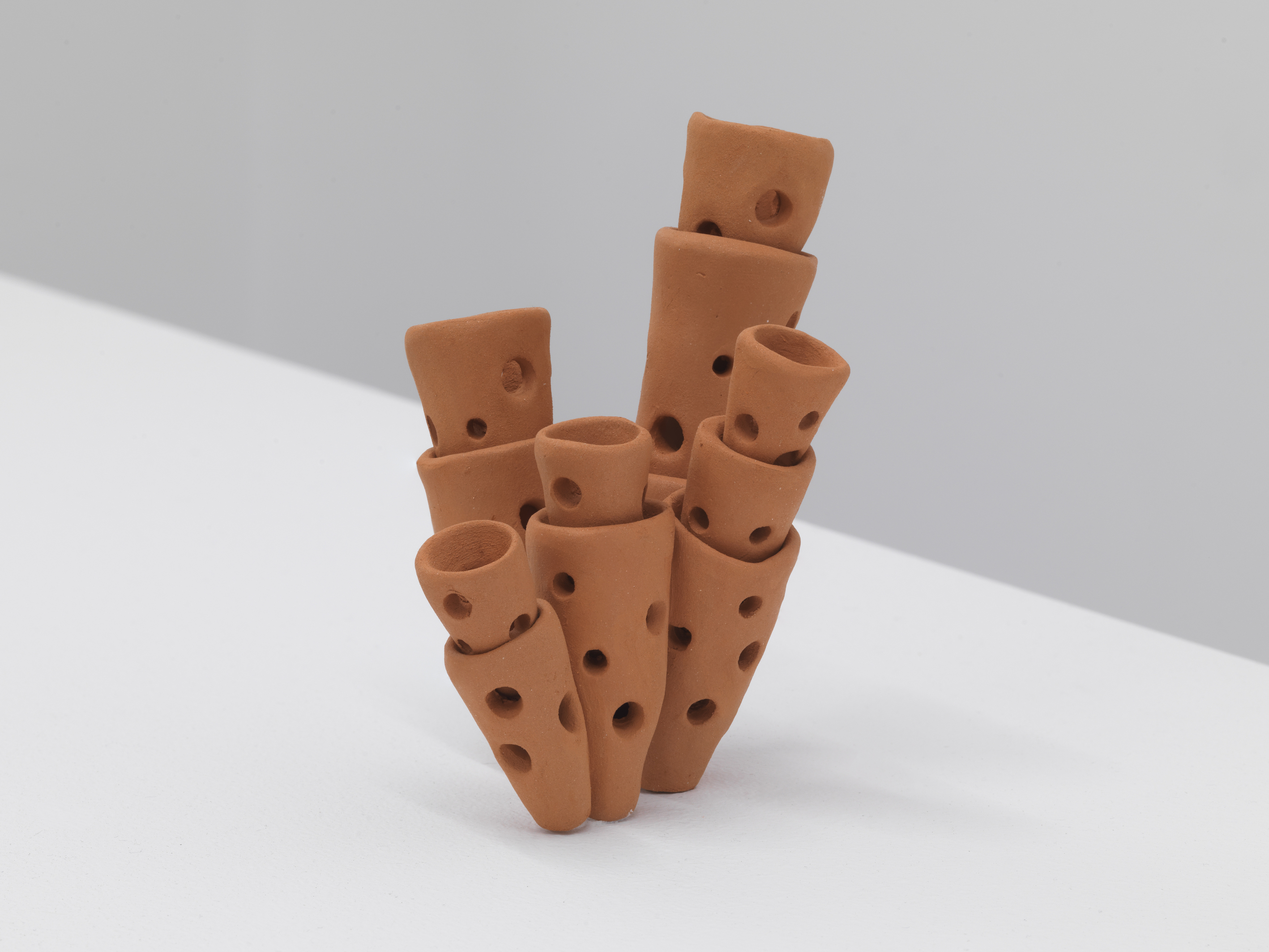
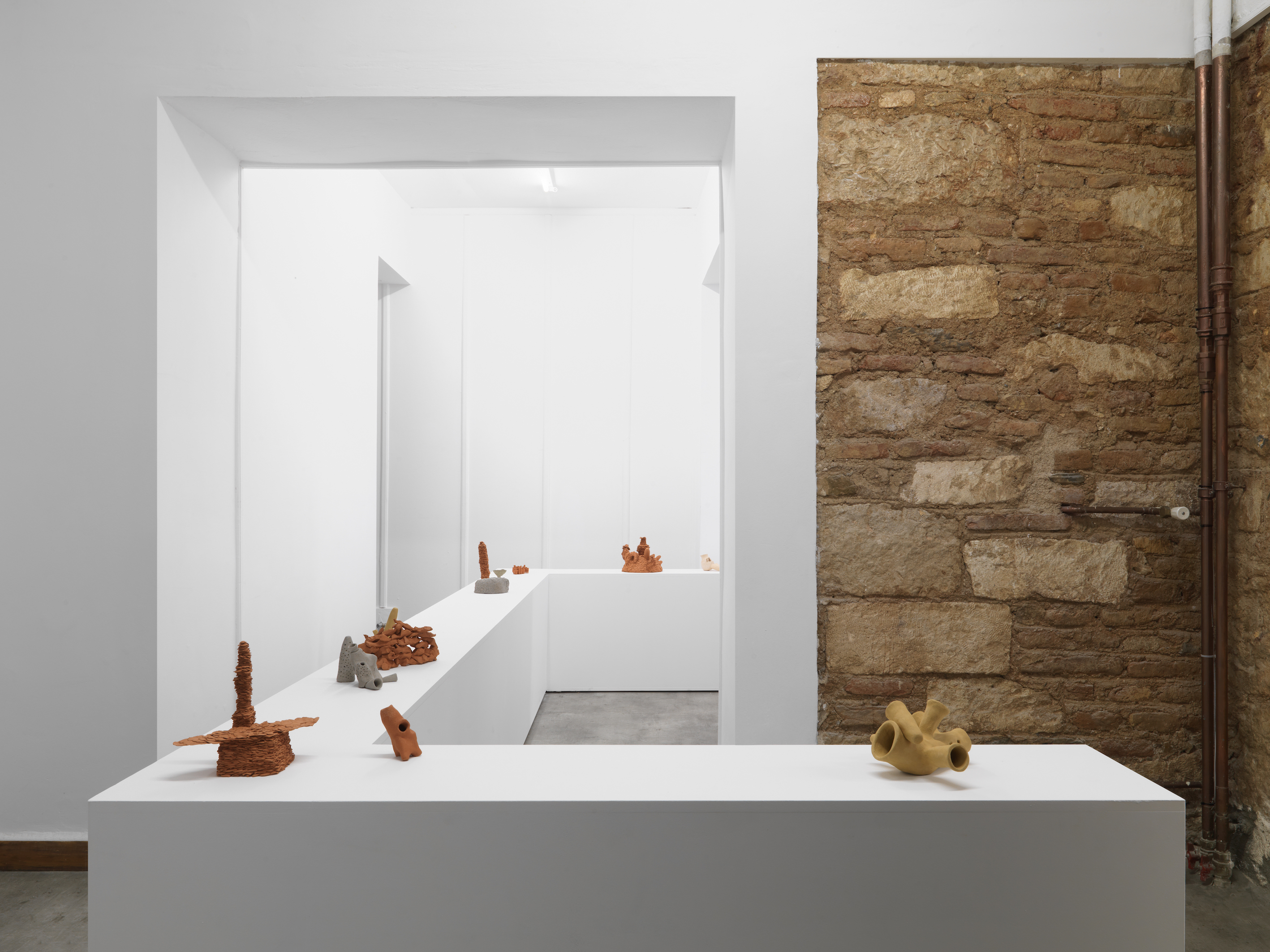
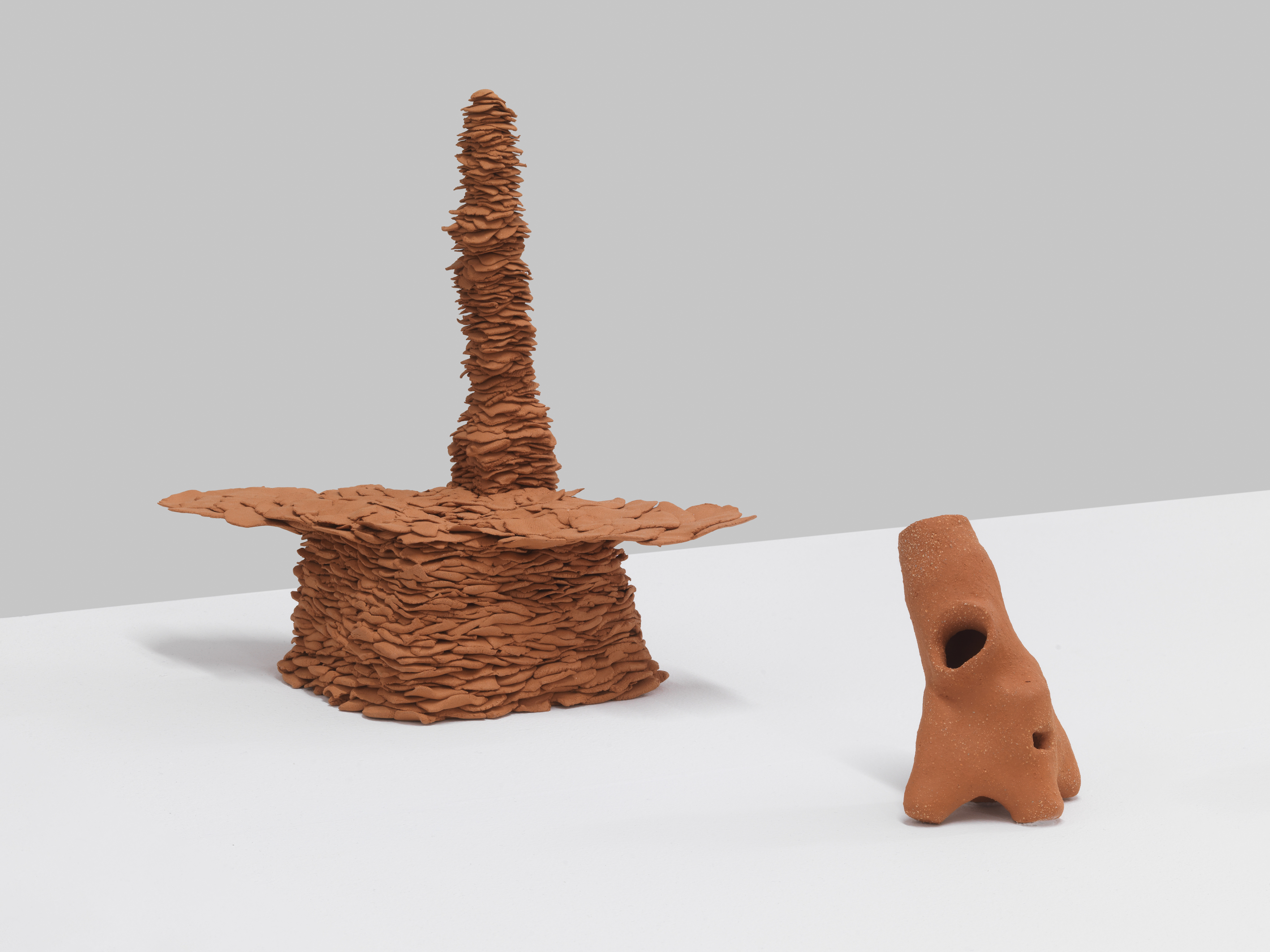
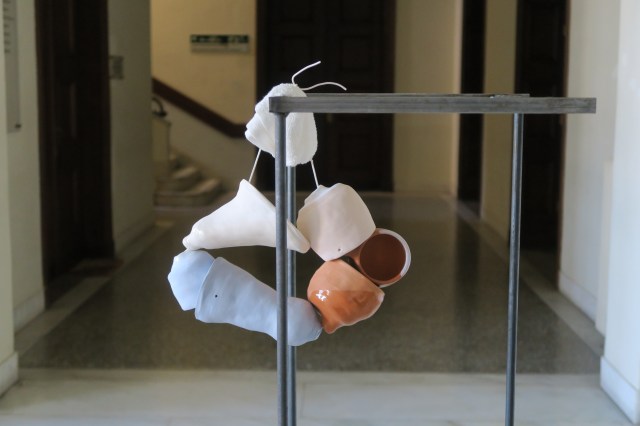
The ceramic exhibits borrow their forms from modern and ancient breast pumps as well as sound producing objects such as megaphones and fifes. The metallic grids that function as showcases make reference to the “gossip table”*. The ceramics hanging on electric cables highlight the idea of information or/and physical substance transmission.

This work acts as a score, an ode to the idea of care that is emphasized through the use of soft towels, which is also a very useful material in sculpture. With the piece Practising Pleasure Where Possible I try to explore the transformation of society from agricultural to industrial, underlining the different roles the woman takes on patriarchal western societies.

*Gossip table: is a piece of furniture that consists of a seating area stretching out to a table where the telephone is located.

images (c) 2018 by Dimitris Parthimos