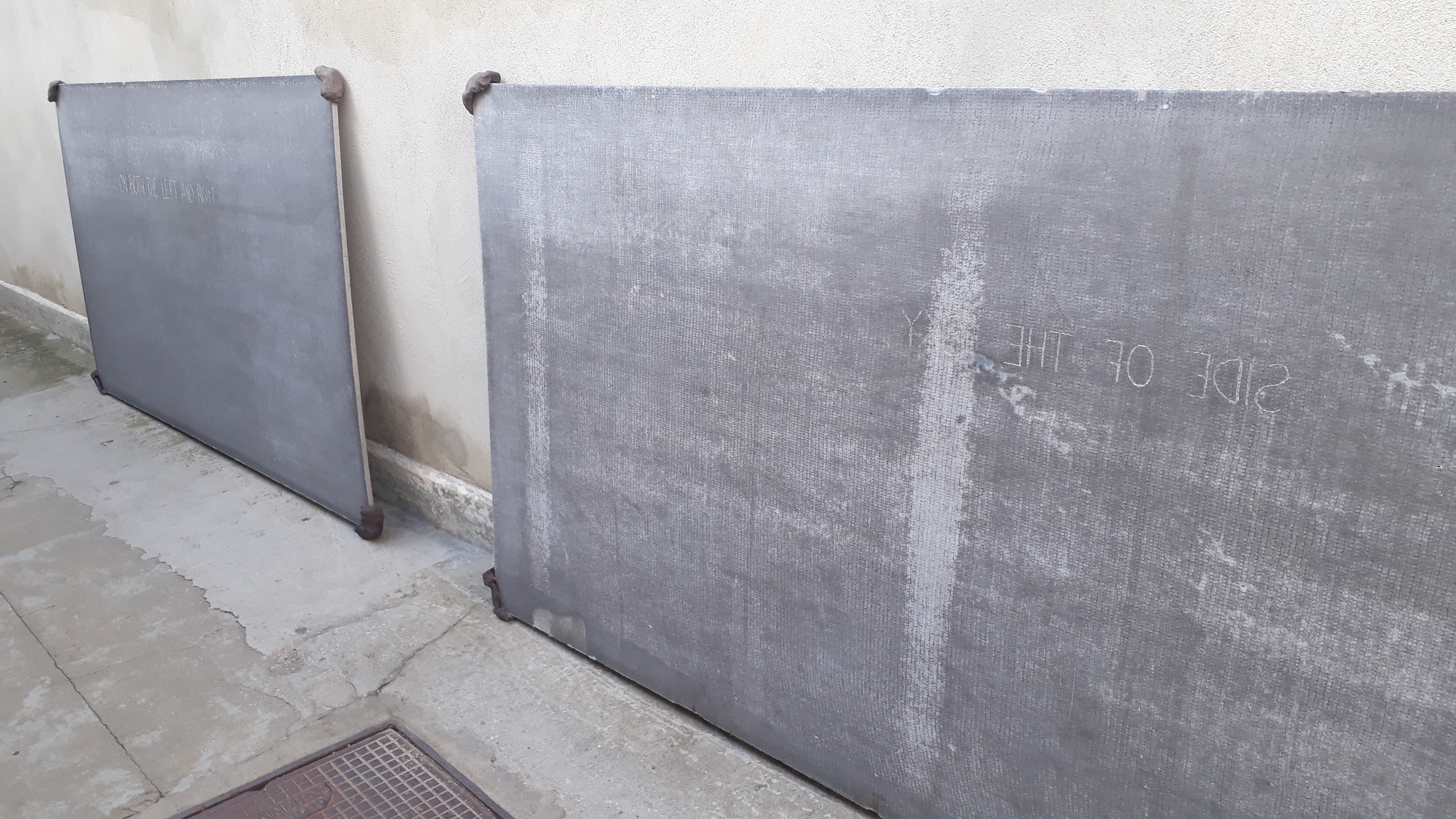
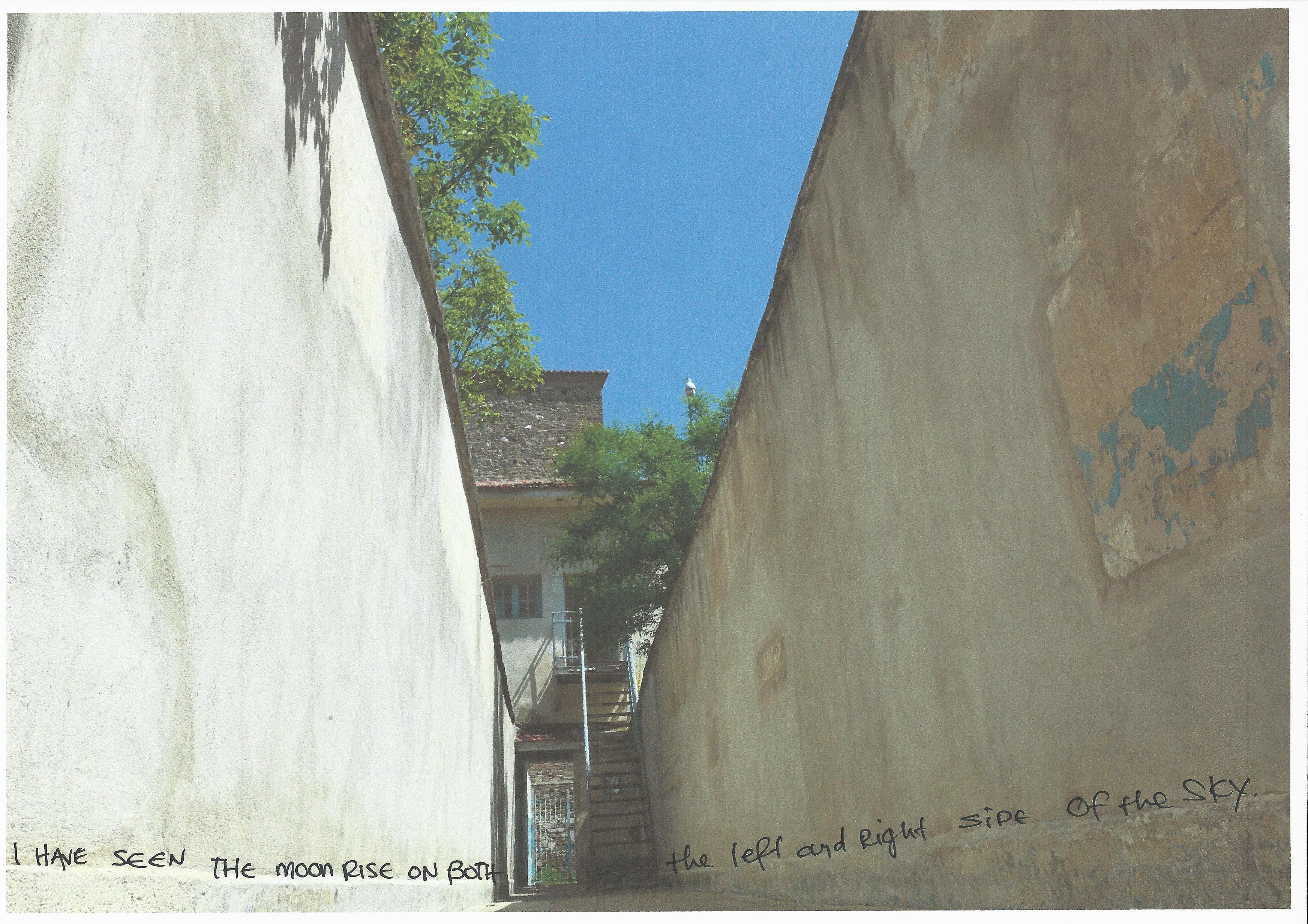
I Have Seen the Moon Rise on Both the Left and Right Side of the Sky, 2023
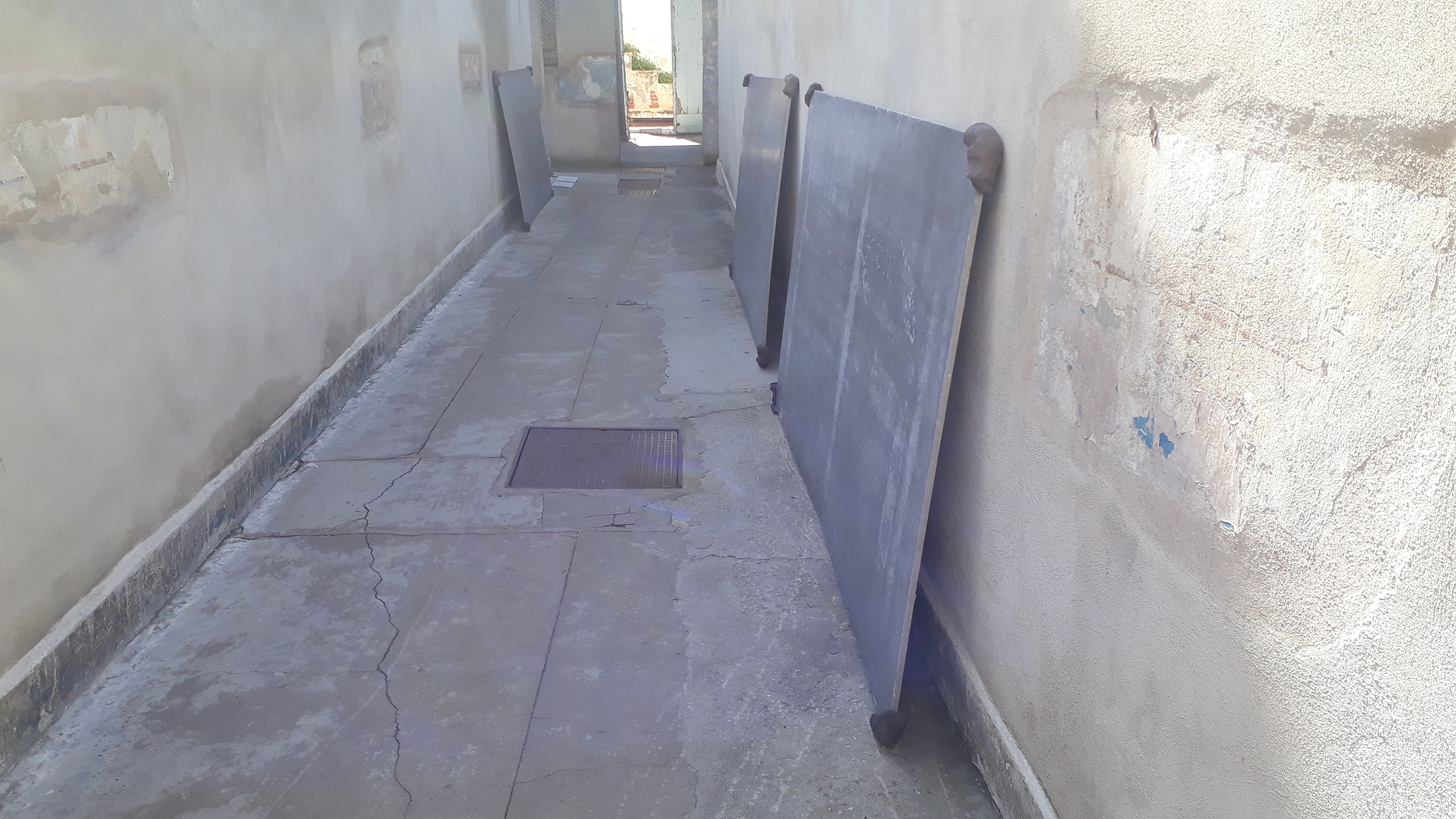
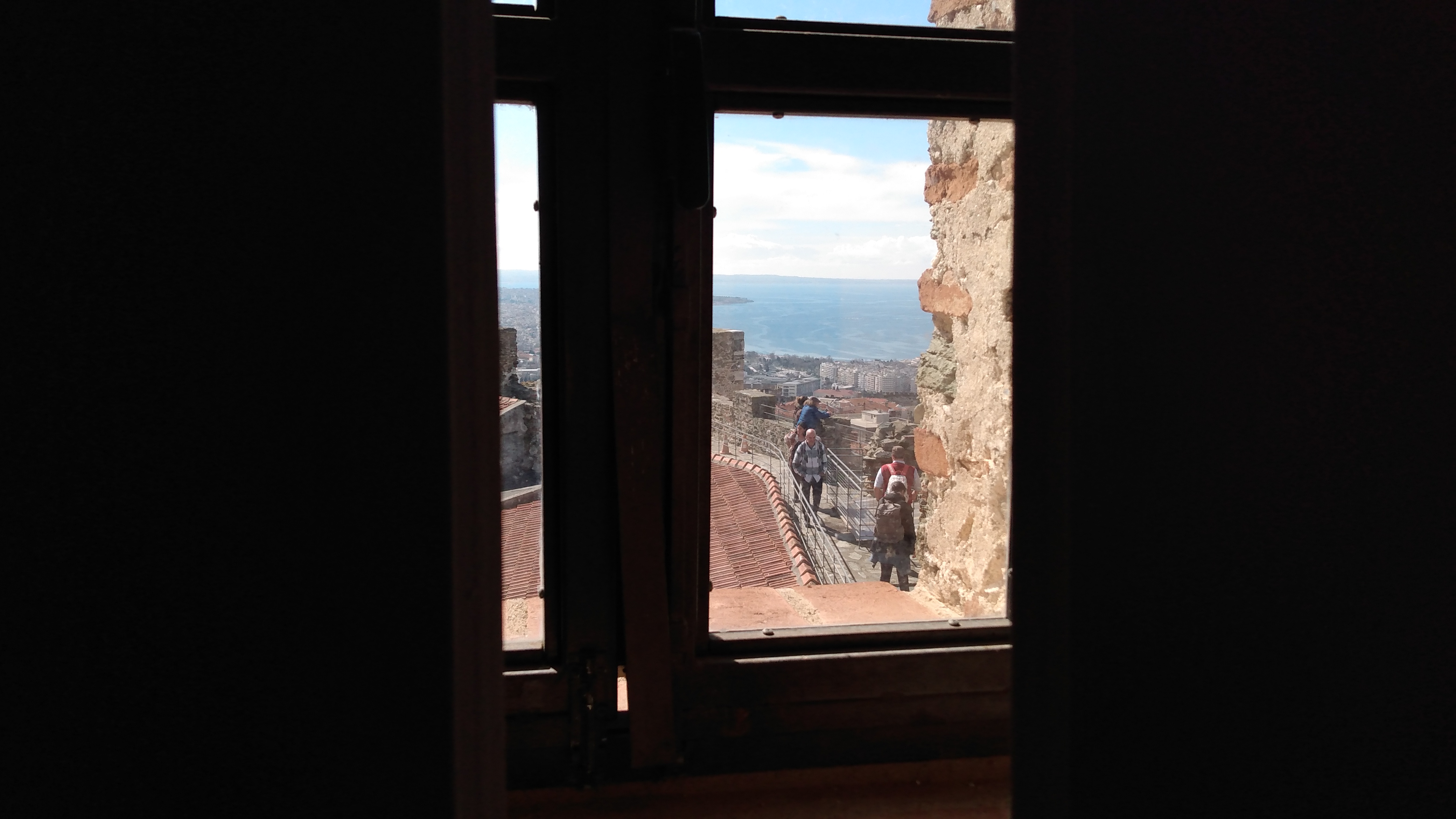
in situ installation at the Eptapyrgio Fortress, Thessaloniki for the 8th Thessaloniki Biennial
The title of the work, is borrowed from the autobiographical book by the Kurdish-Iranian writer and filmmaker Behrouz Boochani, in which the author recounts his journey, in 2013, alongside other refugees from Indonesia to the Australian external territory of Christmas Island, resulting in Boochani’s four years imprisonment in a migrant detention facility on Manus Island, Papua New Guinea.
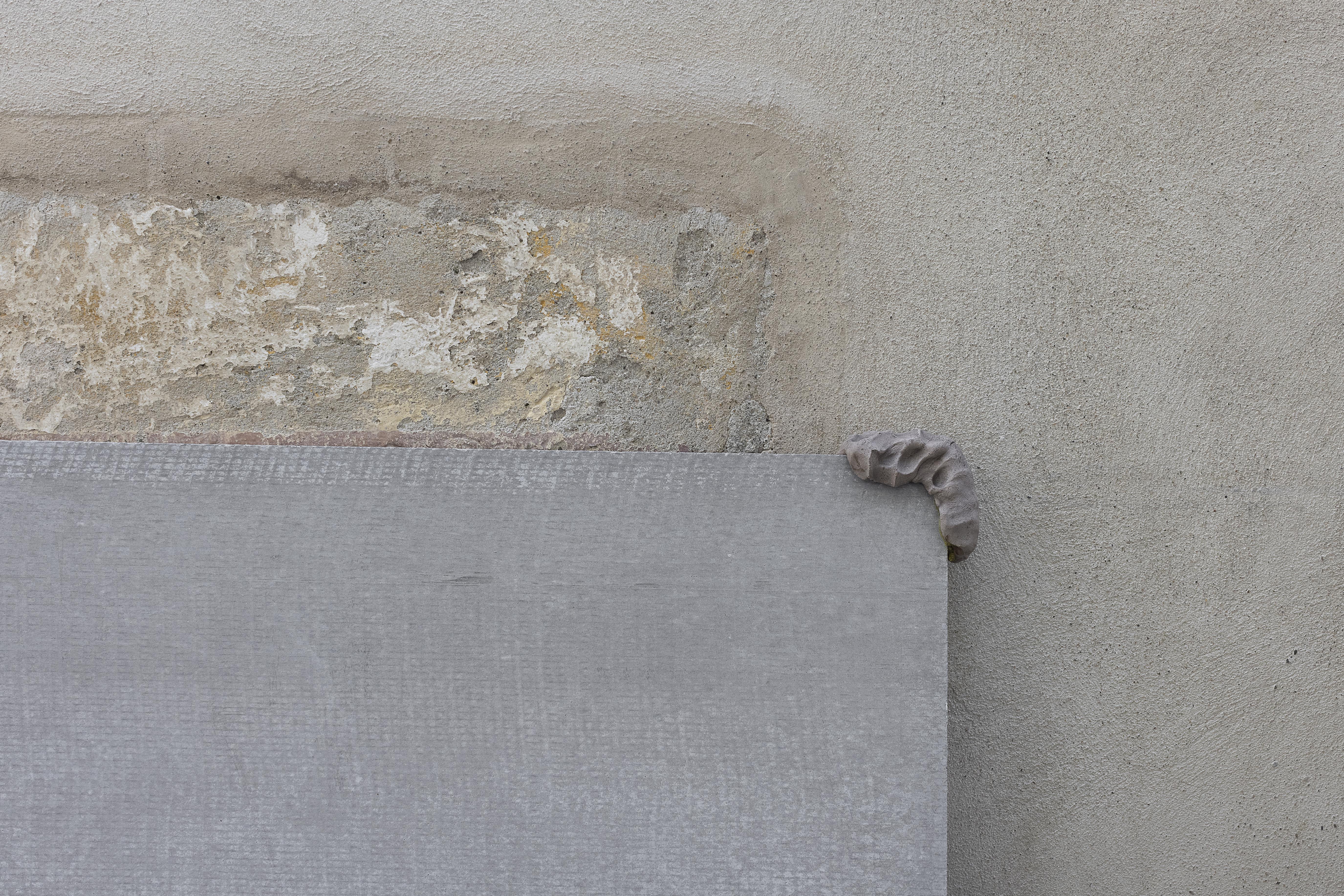
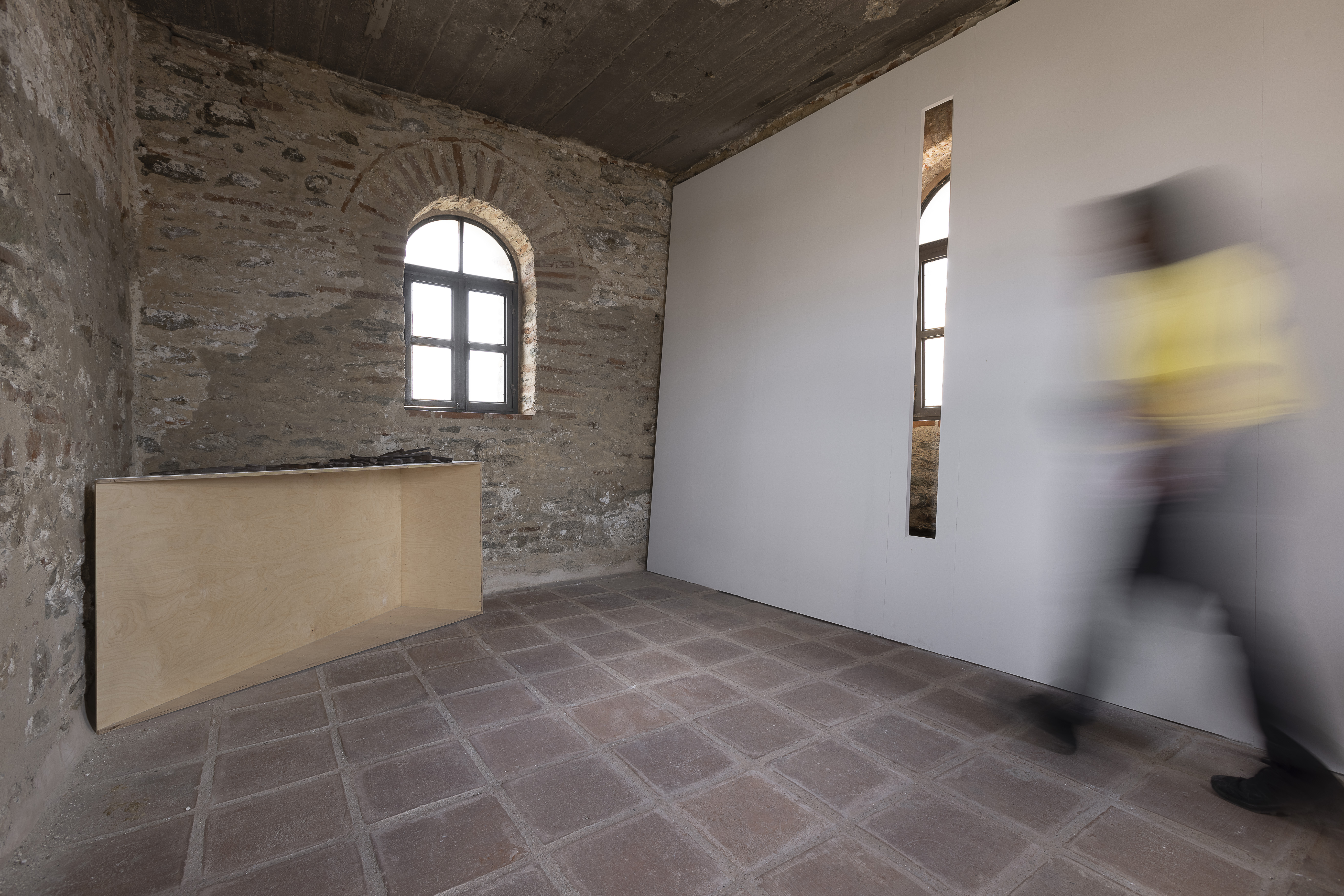
Vlassopoulou’s sculptures explore notions of utility and physicality. The concrete boards set up by the artist create a sense of entrapment and disorientation. The writings on the temporary walls, along the external corridor, refer to the engraved words in the cells of Eptapyrgio, but also to the various markings on trees and benches which serve as presence-declarations. The ceramic spoons and forks, displayed in the enclosed space of the tower, represent a crucial technology for survival. By virtue of their varying sizes, Vlassopoulou suggests their multiple uses, these eating-utensils can also open wedges: for salvation, helping a prison mate widen a window slit; open a door slightly ajar; who knows, even transform inside into outside.
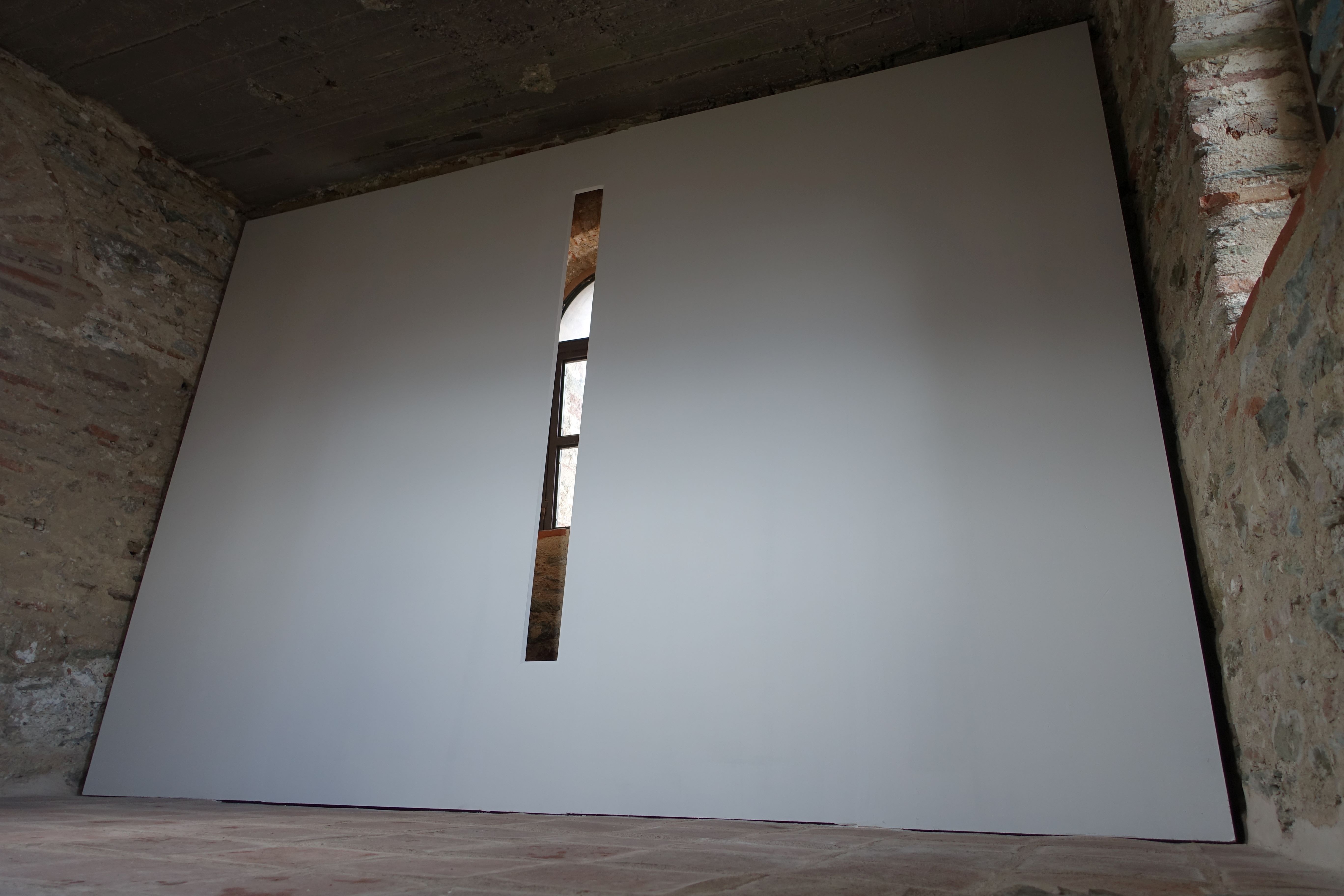
The slit seen in the panel Vlassopoulou created inside the tower is based on the architectural designs of the federal prisons of Chicago, completed in the mid-1970s, Vlassopoulou recreates the minimal opening of the cells’ windows. Slits, in the skyscraper-type correctional institution, are only 2,1 meters-high and feature an opening just 130 mm wide on the concrete walls. This opening is narrow enough to make additional bars redundant, but also wide enough to allow natural light to pass through. Her own constructions are supported by the existing wall. She is interested in this leaning on, this point of contact. The work does not occupy the space, but instead relies on it. Like the former refugees from Asia Minor, who in order to avoid the construction of an extra wall, built their houses parasitically onto the pre-existing walls of the Yedi Kule.




 pakyvlassopoulou.com